
A bucket truck is a mobile aerial work platform mounted on a truck chassis, designed to safely elevate workers and materials to heights typically ranging from 35 to 65 feet. Also called aerial lift trucks, cherry pickers, or bucket lifts, these machines are essential equipment for utility companies, telecommunications providers, tree services, and construction firms that need reliable access to elevated work areas. The bucket truck operates through a hydraulic system powered by the truck’s engine or an auxiliary PTO (power take-off) unit, delivering both vertical and lateral reach while maintaining operator safety through engineered design compliance with ANSI A92 standards and OSHA 1910.67 regulations. When selecting a bucket truck, three critical factors dominate: working height requirements matched to your specific projects, the type of boom configuration—whether overcenter or non-overcenter—that suits your operational scope, and the chassis class that balances payload capacity with maneuverability on your service territory. Understanding these fundamentals allows operations managers to make informed decisions about whether to buy, rent, or lease, ultimately optimizing fleet efficiency and project profitability.
What Is a Bucket Truck and How Does It Work?
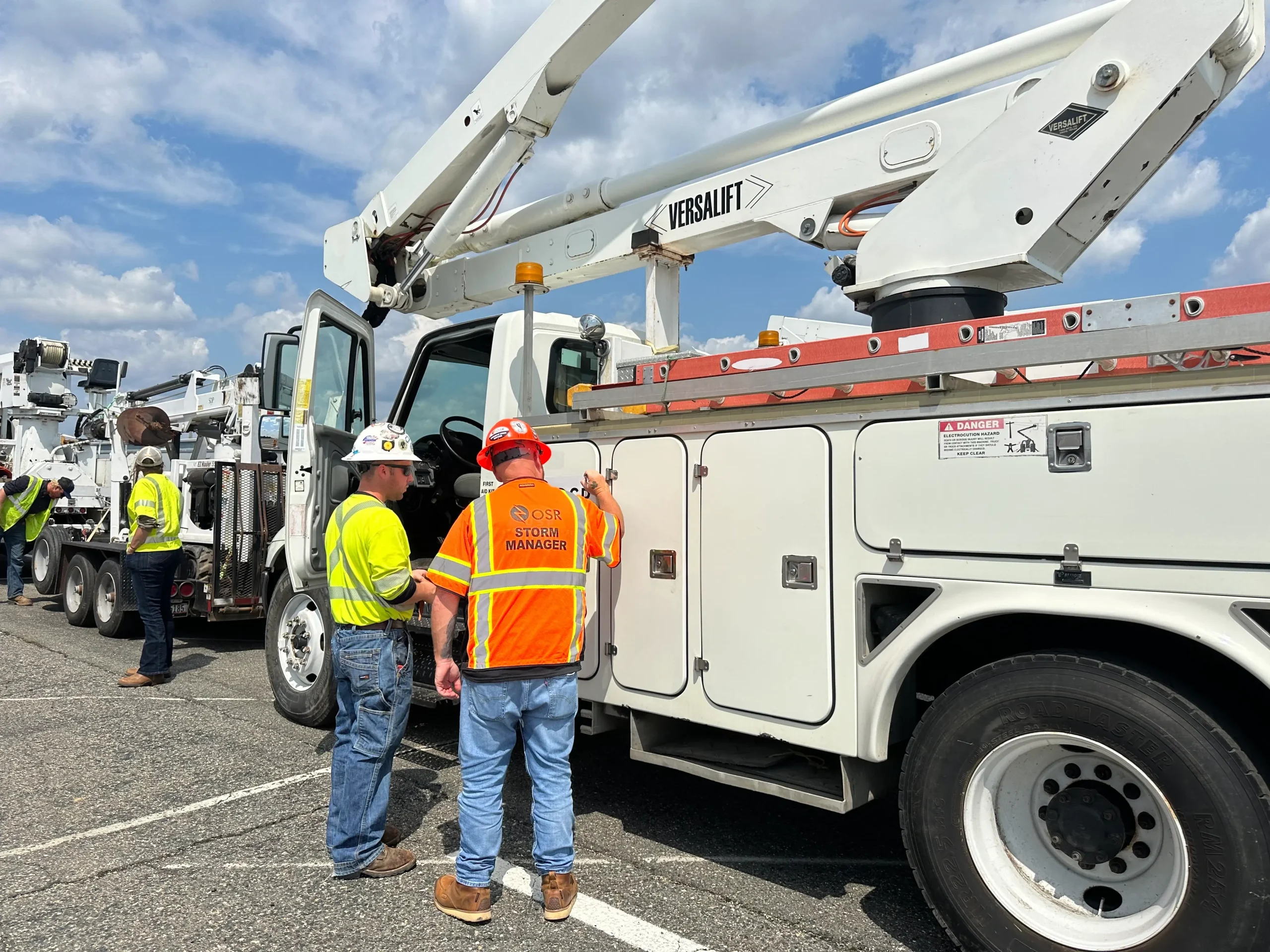
A bucket truck is a specialized vehicle consisting of an insulated bucket or platform attached to an articulating or telescopic boom mounted on a commercial truck chassis. The bucket—typically constructed from fiberglass or aluminum with dielectric properties for electrical work—serves as the elevated work platform where operators access power lines, tree limbs, building facades, and other high-access points. The boom itself derives from either a telescopic design, which extends like a series of nested tubes for linear reach, or an articulating boom configuration, which uses jointed segments to bend and position the bucket more dynamically across vertical and horizontal planes.
Power generation is the backbone of bucket truck operation. The hydraulic system draws energy from the truck’s main engine through a belt-driven pump, or alternatively through a dedicated PTO (power take-off) unit that couples the truck’s transmission to a hydraulic pump. This hydraulic fluid pressurizes cylinders that extend and retract the boom, tilt the boom at various angles, rotate the basket, and in many models provide hydraulic leveling to keep the bucket platform horizontal regardless of ground slope. The operator controls all functions from a pendant, joystick, or integrated control panel mounted inside or near the bucket itself.
Stabilization is equally critical. Most bucket trucks deploy outrigger stabilizers—hydraulic legs that extend perpendicular to the vehicle footprint—to prevent tip-over during operation. These outriggers must make full contact with solid ground, and operators must ensure no obstruction impedes their deployment. The gross vehicle weight rating (GVW) of the truck chassis determines payload capacity, which includes the bucket, boom, and any workers or materials aloft.
What Are the Different Types of Bucket Trucks?
Bucket trucks fall into several distinct categories based on boom design, mounting configuration, and specialized features tailored to different industries.
Overcenter Boom vs. Non-Overcenter Boom: An overcenter boom articulates upward past vertical, allowing the basket to reach over obstacles and even beneath structures like building overhangs. This design excels for utility work on transmission towers, complex roofline access, and tree trimming where positioning flexibility matters. Non-overcenter booms follow a more traditional arc that never passes through vertical; they are simpler mechanically, lighter, and often less expensive.
Telescopic vs. Articulating: A telescopic boom extends straight outward in segments, providing maximum reach at working height with minimal equipment footprint. Articulating booms use multiple jointed segments that fold when retracted, allowing tighter maneuvering in confined spaces but typically offering less maximum reach. Many modern bucket trucks feature hybrid systems combining both technologies.
Chassis Class and Axle Configuration: Bucket trucks mount on Class 3, 4, 5, or 6 commercial truck chassis ranging from single-axle smaller units (appropriate for 35-foot working heights) to dual-axle heavy-duty platforms supporting 65-foot plus operations.
Insulation and Dielectric Properties: Many bucket trucks designed for electrical utility work feature insulated booms and fiberglass upper boom sections that prevent electrical conductivity, supplemented by dielectric testing certification to ensure operator safety around live power lines.
Specialized Configurations: Some bucket trucks incorporate material handler attachments, utility body configurations with integrated storage, or two-man baskets that accommodate multiple workers simultaneously.
How Do You Choose the Right Bucket Truck for Your Project?
Selecting the right bucket truck requires systematic evaluation against project demands, operational constraints, and long-term business objectives.
Start with working height requirements. Measure the maximum vertical distance from ground level to your highest access point, then add a safety buffer of 5-10 feet. Do not assume your truck’s rated height equals usable working height; manufacturers specify height at full horizontal reach, which reduces when the boom angles downward.
Next, assess boom reach. Working height measures vertical distance; horizontal reach determines whether the bucket can clear obstacles and position effectively at that height. A 55-foot working height with minimal horizontal reach suits narrow alleyways and urban power line work; the same height with 40+ feet of horizontal reach serves tree service and broader facility maintenance.
Evaluate mobility and chassis compatibility. Single-axle models navigate tighter spaces but carry lighter payloads and lower working heights. Dual-axle trucks provide stability for taller booms and heavier loads but require wider turning radiuses.
Consider payload requirements. Beyond the operator’s weight, account for tools, materials, and additional workers in the bucket. Two-person buckets require higher GVW ratings.
Determine whether insulation and dielectric testing matter. Utility companies and contractors working near live electrical infrastructure must specify dielectric-tested equipment meeting ANSI A92 standards.
What Should You Look For When Buying a Bucket Truck?
Purchasing a bucket truck demands technical precision and financial discipline.
Boom Condition and Welding Integrity: Request complete service records documenting maintenance, repairs, and any welding performed on boom sections. Have an independent hydraulic or welding technician inspect the boom for cracks, corrosion, or previous repairs. Fiberglass upper booms should show no splintering, delamination, or impact damage.
Hydraulic System Functionality: Demand a full hydraulic pressure test across all functions—boom extension, articulation, rotation, and leveling—to confirm circuits perform within manufacturer specifications. Check for oil leaks at hoses, cylinders, and fittings.
Outrigger Deployment and Locking: Test each outrigger manually and under power to confirm smooth extension, retraction, and lock engagement.
Truck Chassis Condition: Have a heavy-duty truck mechanic complete a pre-purchase inspection, checking engine compression, transmission fluid condition, brake system integrity, tire tread depth, and frame straightness.
Certifications and Compliance Documentation: Confirm the truck holds current ANSI A92 certification, dielectric testing certificates, and safety inspection records.
How Does Bucket Truck Rental Compare to Buying?
The buy-versus-rent decision hinges on project frequency, utilization rates, capital constraints, and operational flexibility.
Renting makes financial sense when you operate bucket trucks irregularly. Rental costs typically range from $300–$600 per day depending on working height and boom configuration, eliminating capital outlay and long-term ownership burden. Our bucket truck rental solutions provide rapid deployment and flexible terms.
Buying becomes economically compelling when your operation uses bucket trucks multiple days per week. Acquisition costs range from $80,000 to $180,000 depending on boom height and chassis class. Our bucket trucks for sale inventory supports companies choosing the ownership path.
Leasing occupies the middle ground, offering fixed monthly payments that spread capital costs over 3-5 years while typically including maintenance and insurance.
Analyze your utilization rate: companies exceeding 50% utilization typically justify ownership; those below 20% utilization almost always should rent.
What Are the Safety and Compliance Requirements for Bucket Trucks?
Operating bucket trucks safely and legally requires understanding ANSI A92 standards, OSHA 1910.67 regulations, and industry-specific best practices.
ANSI A92 Standards: The American National Standards Institute A92 committee publishes comprehensive design and operational standards for aerial lifts, mandating insulation levels for electrical work, stress testing intervals, and safety device functionality.
OSHA 1910.67 Regulations: Key mandates include full-body harnesses tethered to the boom or bucket structure, trained and authorized operators only, daily pre-operational inspections, stable ground conditions, and designated spotters for overhead work.
Dielectric Testing and Electrical Safety: When working near energized power lines, all conductive components must be certified dielectric-tested. Our utility construction services leverage dielectric-tested equipment meeting these standards.
CDL Requirements: Bucket trucks exceeding 26,001 pounds GVW require a Class A CDL in most states.
Maintenance Documentation: Hydraulic systems require inspection and fluid change every 1,000 hours or annually. Booms undergo structural inspection annually.
How Does the Bucket Truck Market Look in 2026?
The bucket truck market continues evolving in response to labor scarcity, environmental regulation, technological advancement, and infrastructure investment patterns. Utility grid modernization is driving steady demand. Manufacturers are developing hybrid and electric-drive options. Telematics systems for fleet management are becoming standard. The rental sector shows robust growth as contractors increasingly prefer operational expense models over capital equipment ownership.
How a Bucket Truck Works
1. Operator Positioning and Control Activation: Deploy outrigger stabilizers fully, verify firm ground contact, and initiate the hydraulic system via the PTO.
2. Hydraulic Pressure Generation: The engine powers a hydraulic pump, pressurizing fluid within the circuit.
3. Boom Extension Sequencing: Pressurized fluid extends the primary boom cylinder in a telescopic or articulating pattern.
4. Bucket Positioning: Fine-tune vertical tilt and rotational azimuth. Hydraulic leveling maintains platform horizontal orientation.
5. Worker Ascent and Load Management: Worker mounts and secures with full-body harness. Cumulative weight must not exceed GVW limits.
6. Operational Work Phase: Bucket truck remains stationary during the service task.
7. Descent and System Shutdown: Retract boom segments in reverse order, lower bucket, retract outriggers, relieve hydraulic pressure.
What to Look For in a Bucket Truck Provider
Fleet Age and Maintenance Standards: Request inspection reports and maintenance logs. Newer equipment (5 years or less) typically offers superior reliability.
Certification and Compliance Documentation: Verify current ANSI A92 certification and dielectric testing certificates.
Operator Training and Qualification Credentials: Confirm operators hold current certification from a recognized training program.
Availability and Rapid Response: Evaluate inventory depth and geographic distribution.
Insurance and Liability Coverage: Request certificates of insurance naming your company as additional insured.
Customer References and Reputation: Speak with existing customers about equipment condition, response times, and problem resolution.