
If you need a bucket truck for utility line work, storm restoration, or right-of-way maintenance but don’t want to invest in equipment ownership, renting is your fastest path to the job site. A bucket truck rental typically costs $150–$400/day depending on truck type, reach height, and regional demand, with weekly and monthly discounts available. The key to finding the right rental at the right price is knowing what to specify, where to look, what questions to ask, and which rental companies actually stock utility-grade equipment in your region. ATK Logistics provides utility-spec bucket trucks across the Southeast and Gulf Coast with same-day or next-day availability, flexible rental terms, and deployment support for crews and contractors who need consistent access to working heights.
What Is a Bucket Truck & Why Rent One?
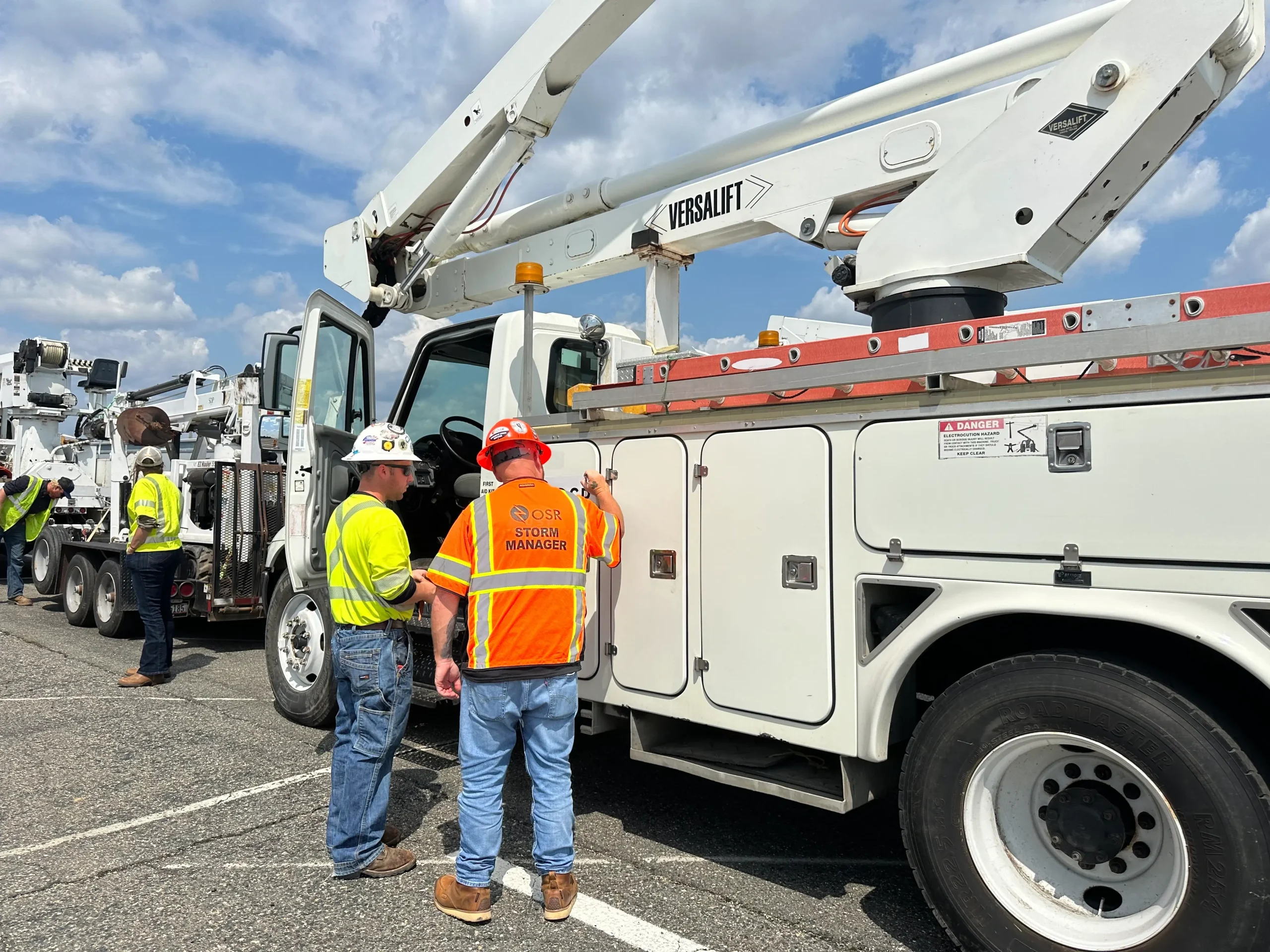
A bucket truck (also called an aerial lift truck or cherry picker truck) is a commercial vehicle with a hydraulic boom and personnel basket mounted on the chassis. The operator controls the basket from the ground, raising workers safely to heights of 35–65+ feet for line clearance, pole attachment, wire stringing, and emergency repairs. Bucket trucks are essential for utility contractors because they eliminate scaffolding setup time, allow work on poles and structures that can’t be climbed, and meet OSHA safety requirements for work at height.
Renting a bucket truck makes sense when:
– Project duration is short (days to weeks) — avoid capital expenditure
– You need specialized heights or boom types — rent exactly what the job requires
– Demand is irregular — don’t pay depreciation and maintenance on idle equipment
– You operate in multiple regions — rent locally instead of transporting owned equipment
– Fleet surges are unpredictable — add capacity quickly during storm season or bid wins
How Much Does It Cost to Rent a Bucket Truck?
Rental pricing depends on reach height, truck weight class, hydraulic power, and regional demand. Standard utility bucket trucks rent for:
– 35–40 ft reach: $150–$250/day
– 45–55 ft reach: $200–$350/day
– 60+ ft reach: $300–$400+/day
Weekly rates typically save 20–30% vs. daily rates; monthly rates save 40–50%. Some companies charge mileage fees or equipment delivery surcharges. ATK Logistics publishes flat daily rates with no hidden fees and offers discounted multi-unit deployments for crews renting 5+ trucks.
What to Expect When You Rent from a Bucket Truck Company
When you contact a bucket truck rental company, here’s the standard process:
1. Specify your needs — Reach height, load capacity (basket weight + personnel + tools), job duration, location, and work type (line clearance, construction, arborist, etc.)
2. Get availability & pricing — Ask about specific models, insurance requirements, fuel, and any restrictions
3. Request a quote — Confirm daily/weekly/monthly rate, delivery cost, fuel policy, and damage waiver options
4. Provide credentials — Driver’s license, worker’s comp proof, commercial insurance (usually $1M general liability)
5. Sign rental agreement — Details equipment specs, liability, return condition, fuel/damage terms
6. Pick up or take delivery — Inspect equipment with the rental agent, note condition, fuel level, and operating limits
7. Operate safely — Follow OSHA rules, keep bucket clear of overhead hazards, ground the truck on level soil
8. Return equipment — Clean truck, fill fuel, report any damage within damage waiver grace period
How It Works: The Step-by-Step Rental Process
Step 1: Assess Your Project Needs
Before calling a rental company, determine:
– Maximum working height needed
– Load weight (personnel + tools + equipment in basket)
– Job duration (days/weeks/months)
– Frequency (one-time or recurring)
– Delivery location (job site or yard pickup)
Step 2: Request Quotes from Multiple Providers
Contact 2–3 bucket truck rental companies in your region. Ask for:
– Specific truck models and boom reach specs
– Daily/weekly/monthly pricing
– Fuel policy (full-to-full or included)
– Delivery/pickup fees
– Insurance and damage waiver details
– Availability for your preferred dates
Step 3: Compare Equipment & Terms
Evaluate:
– Boom reach and basket size (wider baskets fit 2 workers + tools)
– Truck chassis weight and tire conditions (important for soft ground)
– Hydraulic power and stability control
– Fuel efficiency and refueling options
– Operator manual and safety training included
Step 4: Confirm Liability & Insurance
Verify:
– Your commercial general liability ($1M minimum typical)
– Rental company’s waiver coverage (damage limits, exclusions)
– Additional insured requirements
– Late return and damage fees
Step 5: Reserve & Schedule Delivery
Confirm:
– Exact rental start/end dates
– Delivery time and job site access
– Fuel level on arrival
– After-hours return options if needed
Step 6: Inspect Equipment on Arrival
Walk through with the rental technician:
– Check boom and basket for damage
– Test hydraulic controls (smooth, responsive)
– Verify fuel level
– Confirm tire condition and pressure
– Get emergency contact number for breakdowns
Step 7: Operate Within Safety & Lease Terms
During the rental:
– Never exceed rated load or reach height
– Keep bucket clear of overhead lines
– Ground the truck on level, stable soil
– Follow daily equipment checks (hydraulic fluid, fuel, tire pressure)
– Report any mechanical issues immediately
– Keep fuel level above 1/4 tank
– Document any unforeseen damage with photos
Step 8: Return in Good Condition
At return:
– Clean dirt/mud from truck and boom
– Fill fuel tank to departure level
– Return all keys, documentation, manuals
– Report wear/tear within damage waiver period
– Get signed return acknowledgment
What to Look For When Choosing a Bucket Truck Rental Company
Equipment Specifications & Maintenance
– Utility-spec trucks (not arborist or construction-grade) with lineman baskets
– Regular maintenance records (hydro testing, hydraulic fluid changes)
– Models 3–8 years old (newer = safer, older = less reliable)
– Backup inventory if your truck breaks down mid-project
Competitive Pricing & Flexibility
– Transparent daily/weekly/monthly rates (no surprise fees)
– Discounted multi-unit rental rates
– Flexible rental periods (same-day, next-day, weekend availability)
– Damage waivers and fuel options that fit your budget
Geographic Coverage & Deployment Speed
– Rental yards within driving distance (same-day pickup or next-day delivery)
– Fleet size to handle seasonal demand surges
– Emergency availability during storm season
– Experience with utility contractors and recurring orders
Insurance, Safety & Compliance
– General liability coverage (rental company carries excess insurance)
– OSHA-compliant equipment with current certifications
– Safety training and equipment manuals provided
– Responsive customer support for equipment issues
Reputation & Reviews
– References from other utility contractors
– Quick turnaround on customer support calls
– Positive reviews on local contractor forums
– Track record with emergency/surge rental requests
ATK Logistics meets all these criteria with utility-grade bucket trucks across the Southeast and Gulf Coast, same-day availability, and deployment support for crews needing rapid fleet scaling.
How Much Will Your Bucket Truck Project Really Cost?
Budget for:
– Rental rate: $150–$400/day (depends on reach height)
– Delivery/pickup (if applicable): $50–$200 each way
– Fuel surcharge (if not included): $20–$50/day
– Damage waiver (optional): 10–20% of daily rate
– Insurance (your GL policy): Usually already budgeted
Example: Renting a 50 ft bucket truck for 5 days at $250/day = $1,250. Add $200 delivery and $100 damage waiver = $1,550 total. For a weekly rental, the same truck might be $1,000/week (20% discount), or $4,000/month (40% discount) if you need it longer.
Bucket Truck Rental vs. Buying vs. Leasing
Renting (best for short-term, variable demand)
– Daily costs: $150–$400
– No maintenance responsibility
– Lowest upfront commitment
– Ideal for one-off projects or seasonal surges
– Risk: Equipment availability during peak season
Buying (best for high-utilization, long-term ownership)
– Purchase cost: $80,000–$150,000+ (new bucket truck)
– Annual maintenance: $2,000–$5,000
– Depreciation: ~$10,000–$15,000/year
– Control and customization
– Break-even: ~15–20+ years of heavy use
– Risk: Equipment idle time, obsolescence, repair costs
Leasing (hybrid of renting and buying)
– Monthly cost: $2,000–$4,000 (varies by lease term)
– Includes maintenance and insurance
– 3–5 year lease terms
– Option to purchase at end of lease
– Predictable monthly costs
– Risk: Long-term commitment, upgrade flexibility limited
When to rent: Short projects (days/weeks), unpredictable demand, multiple locations, testing equipment before buying
When to lease: Growing fleet needs, steady demand, capital preservation, 2–5 year outlook
When to buy: Frequent daily use (200+ days/year), long ownership timeline, specific customizations, lowest long-term cost per use
Bucket Truck Rental: Common Questions & Answers
Q: Can I rent a bucket truck with my regular driver’s license?
A: Yes. You must have a valid driver’s license and proof of commercial insurance (general liability, $1M minimum). No CDL is required for bucket trucks under 26,000 GVWR.
Q: What if the bucket truck breaks down during my rental?
A: Contact the rental company immediately. They typically provide a loaner truck or send a technician. Most contracts include equipment repair liability with the rental company, not the customer.
Q: Does the rental company provide fuel?
A: Most rental companies operate on a “full-to-full” model: you receive the truck with a full tank and return it full. Some offer fuel included in the daily rate. Confirm this before renting.
Q: Can I rent a bucket truck for just a few hours?
A: Most companies have a 4- or 8-hour minimum, but daily rates are standard. Ask about half-day rates if you need short-term access.
Q: What’s the difference between a bucket truck and a boom lift?
A: Bucket trucks are chassis-mounted (truck frame) and designed for line work. Boom lifts are often trailer-mounted and designed for construction. Both provide working heights but have different load ratings and applications.
Q: How do I know what reach height I need?
A: Measure from ground to your highest work point, then add 5–10 feet for safety clearance. A 45 ft bucket truck reaches about 40 ft of working height; a 60 ft truck reaches ~55 ft. Always verify with the equipment specs.
Q: Can multiple people work in the bucket at once?
A: Yes, if the bucket is rated for 2+ personnel. The rating is clearly marked on the bucket. Do not exceed the rated load.
Q: What safety certifications should a rental bucket truck have?
A: Look for ANSI/IUEC (Powered Access Equipment) certification, OSHA compliance, and recent annual hydro testing records. Utility-spec trucks should have lineman basket certifications.
Q: How long in advance should I book a bucket truck rental?
A: For standard demand, 1–2 weeks. During storm season or summer peak season, book 3–4 weeks ahead. Many rental companies offer same-day or next-day availability for short-notice jobs.
Q: What if I damage the bucket truck?
A: Rental agreements typically include a damage waiver (10–20% of daily rate). Minor wear is expected; significant damage may trigger repair costs. Most waivers cover accidental damage but not negligence or abuse.
Q: Do I need training to operate a bucket truck?
A: Yes. Operators must complete OSHA-compliant bucket truck safety training. Many rental companies provide training; ask when you reserve. At minimum, read the operator manual and follow the safe work plan.
Q: What’s the best way to find bucket truck rentals near me?
A: Search “bucket truck rental near [your city]” or call regional equipment rental companies. ATK Logistics serves the Southeast and Gulf Coast with utility-grade bucket trucks and same-day deployment options.
—
Ready to rent a bucket truck for your next project? Contact ATK Logistics for utility-grade bucket trucks across the Southeast and Gulf Coast. Same-day availability, competitive pricing, and deployment support for crews and contractors. Call today for a quote.
Related topics: tooled bucket truck rental, bucket truck rental utility, digger derrick rental, bucket truck leasing, aerial lift rental utility contractor, rent bucket trucks for a crew, bucket truck rental.