
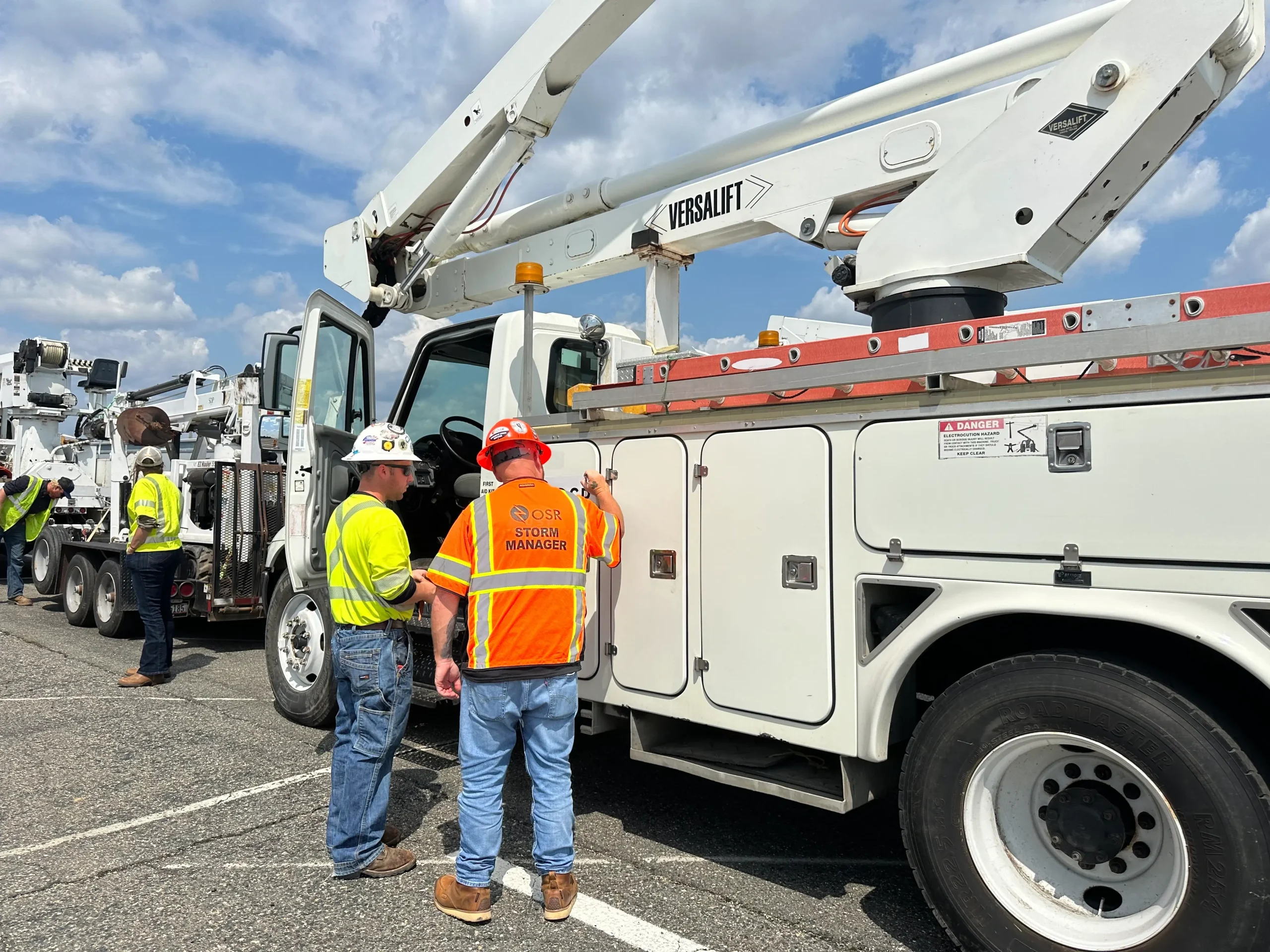
Utility line work moves at the pace of production. When a contractor deploys a bucket truck for a distribution build, storm restoration, or scheduled maintenance work, the rental process determines whether the crew starts productive work on day one or spends the first day organizing equipment and handling workarounds. The right rental partner delivers equipment that’s rated for the work, maintained to operational standards, and available when deployment windows are compressed. Not all bucket truck rentals are created equal. General rental houses carry aerial work platforms built for construction trades—drywall crews, painters, HVAC installers—not utility line contractors. Utility bucket truck rental has distinct requirements: insulation ratings, appropriate working height and horizontal reach, maintained equipment condition, chassis suitability for field terrain, and clarity on what tooling arrives with the unit. ATK Logistics provides bucket truck rental for utility contractors across the Southeast, with equipment maintained to utility standards and available for rapid mobilization to distribution construction, pole maintenance, and storm restoration work. Understanding what separates utility-specific bucket trucks from general construction rentals prevents costly mistakes and keeps your crews productive from day one.
—
What Utility Contractors Need from a Bucket Truck Rental: Critical Requirements
Working height and reach specifications matched to distribution work standards. Distribution line work happens at different heights depending on structure class, conductor configuration, and local utility standards. A bucket truck with inadequate working height can’t access the work; a unit with insufficient horizontal reach forces the truck into unsafe positioning or limits the crew’s working angle. Know the specific working height and side reach required before requesting quotes. Request documentation of load-rated working height and horizontal reach from the bucket to the tip of the boom at maximum extension, measured from the base of the unit under load. Generic specifications from the manufacturer aren’t enough—confirm the actual unit being quoted meets specifications. Load-rated specifications are essential because capacity decreases as boom extends; confirm that your specific working position falls within rated capacity limits.
Insulation rating and voltage certification for live-line adjacent work. Utility line work adjacent to energized conductors requires equipment rated for the voltage environment. A bucket truck deployed for live-line adjacent work without proper insulation creates immediate electrocution hazard. Confirm insulation class and certification date before committing to the rental. Non-insulated equipment should not be accepted for any work in a Category A or B work zone (within arm’s reach or tool reach of energized lines). Insulation ratings are expressed in kilovolts (7.5kV, 12kV, 15kV, 25kV, 35kV, etc.) and must match or exceed the system voltage where the bucket truck will operate.
Unit condition and documented preventive maintenance status confirmation. A bucket truck that goes down on a job doesn’t just cost the rental day—it costs the crew’s entire day of production, customer wait time, and potential contract delays. Utility contractors can’t afford downtime on rental equipment. Before committing to a rental unit, ask about the most recent preventive maintenance performed, what work was completed, and what the current condition status is. Request maintenance records from the rental provider. Units with deferred maintenance or unclear service history should be declined; request a different unit. Review PM records covering at least the past 12 months to ensure the unit has been actively maintained rather than minimally serviced.
Chassis and drivetrain suitability for actual job site terrain conditions. Utility job sites are rarely on paved surfaces. Gravel access roads, soft ground near right-of-way corridors, rutted construction sites, and post-storm environments require a chassis that can handle the terrain without getting stuck or becoming stranded. A rental unit that can’t navigate the access creates a liability and wastes resources getting the truck positioned. Before confirming a rental, assess whether the unit’s tire type, ground clearance, and drivetrain (single axle, tandem, four-wheel drive) match the site conditions. Four-wheel-drive units provide better terrain capability but may have higher rental rates than single-axle configurations.
Tooling and rigging configuration: tooled vs. bare rental options. Whether the unit comes tooled—equipped with line tools, rubber goods, grounding equipment, hand tools, and storage—or bare affects how fast a crew can put the bucket truck to productive work. Tooled units arrive ready to work; bare units require the crew to source, transport, and organize tools before the first wire is touched. Clarify what comes with the rental before assuming the unit is fully equipped. Some providers offer modular tooling options—base rental with optional add-ons. Understand the full cost structure before committing. Tooled rentals typically cost 10-20% more per day but eliminate first-day setup overhead.
—
When Utility Contractors Rent Bucket Trucks: Common Deployment Scenarios
Fleet gaps during peak production periods and multi-project operations. When a contractor’s owned fleet is fully committed to multiple jobs and a new project comes in, rental fills the gap without a capital equipment decision. Project-based rental allows the contractor to expand capacity temporarily without the depreciation and carrying costs of ownership. Rental terms can be negotiated for specific project durations—weeks, months, or seasonal arrangements. Contractors with variable workload benefit significantly from rental flexibility.
Storm mobilization and emergency response in concentrated damage windows. After a major weather event, restoration demand spikes rapidly across the affected region. Equipment availability becomes the bottleneck. Pre-event rental relationships allow contractors to activate equipment within hours. Cold-call requests during active storms face queue delays because every contractor in the region is calling for the same equipment at the same time. Contractors with pre-season agreements are prioritized and mobilize faster. Storm response contractors routinely establish relationships with 2-3 rental providers to ensure adequate capacity.
Project-specific equipment requirements and specialized configurations. Some jobs require specific bucket truck configurations—particular working height, insulated boom, certain chassis (truck-mounted vs. trailer-mounted), or specialized tooling—that aren’t standard inventory. Renting the exact configuration for that project is more cost-effective than owning multiple unit configurations. Specialized equipment is an ideal rental use case.
Equipment out-of-service due to maintenance and continuity management. When a contractor’s primary unit is down for scheduled inspection, maintenance, or major repair, rental keeps production moving. Unplanned downtime is common in utility operations; having a rental relationship established before the breakdown occurs prevents scrambling in a reactive posture. Contractors should identify rental partners before needing emergency support.
Geographic expansion and workload validation in new service territories. Contractors expanding service territory may prefer to rent bucket trucks in a new region before committing owned equipment to that geography. Rental removes capital requirement and allows validation of sustained workload before making permanent positioning decisions.
—
How the Equipment Rental Process Works: Step-by-Step Guide
Step 1: Define the work scope, timeline, and detailed equipment specifications. Before contacting a rental provider, clarify the work to be performed: What is the working height requirement? Horizontal reach? Voltage environment (Category A, B, or C work zone)? Terrain access conditions? Project start date and expected duration? Whether tooling is included or needed separately? Clarity on these details accelerates the quoting process and prevents wasted back-and-forth communication. Document your specific requirements in writing to provide to rental providers.
Step 2: Request a detailed equipment quote and comprehensive specification sheet. The rental provider should respond with specifics on the unit being quoted: exact model, rated working height under load, horizontal reach, bucket capacity, GVWR, insulation rating and certification date, most recent PM date and scope, delivery timeline, and daily/weekly/monthly rates. The quote should specify what’s included (fuel, delivery, operator support, tooling) and what costs extra (extended distance delivery, weekend standby, operator repositioning). Compare quotes from 2-3 providers before deciding.
Step 3: Verify insulation certification and review complete maintenance history. Request documentation of insulation class certification and the date it was last tested. Ask for maintenance records showing when the last PM was performed, what work was completed, and current condition status. If the rental provider can’t provide this documentation, request an alternative unit. Don’t accept a quote on an undersized or non-insulated unit; the savings aren’t worth the field problems. Request maintenance records in writing.
Step 4: Arrange delivery logistics and confirm specific mobilization timeline. Once the unit is approved, coordinate the delivery date, time window, and location. Confirm whether the rental provider delivers to your site or you arrange transport. If delivery is multi-state or beyond the provider’s standard service area, confirm fuel charges, per-mile fees, and delivery costs. Establish a firm mobilization date to allow crew staging and site prep. Document delivery logistics in writing.
Step 5: Conduct comprehensive pre-delivery acceptance and equipment inspection. When the unit arrives on-site, conduct a joint walk-around with the rental provider’s representative. Confirm the unit is in the rental condition advertised. Perform a pre-use checklist: test the boom articulation, bucket controls, hydraulic operation, lights and safety equipment, and structural integrity. Document the unit condition at acceptance. Any discrepancies should be addressed before the unit is considered accepted and ready for work. Take photos of unit condition before work begins.
Step 6: Verify operator qualifications and conduct operational orientation briefing. Bucket truck operation requires CDL Class A or B, specific aerial device certification, and current medical certification. The rental provider should confirm the contractor’s operator meets these requirements. Many providers offer a brief operational orientation on the unit’s controls, boom characteristics, and any quirks specific to that model. This is valuable if the crew isn’t familiar with the exact unit. Document operator training and credentials in rental records.
Step 7: Execute work and report maintenance issues to rental provider immediately. During the rental period, the crew operates the unit per the rental agreement and maintenance schedule. Any mechanical issues, hydraulic leaks, control problems, or safety concerns should be reported to the rental provider immediately. Maintenance and repairs are the rental provider’s responsibility, not the contractor’s. Don’t attempt to repair or modify rental equipment. Establish a clear protocol for reporting maintenance issues.
Step 8: Return the unit and process final settlement and damage assessment. At the end of the rental period, return the unit to the rental provider’s facility or a pre-arranged location. The unit is inspected for damage beyond normal wear. The contractor is responsible for damages incurred during misuse or accident (depending on damage waiver coverage), but not for normal operational wear. Final invoice is issued within a few days, and any damage disputes are resolved per the rental agreement terms. Document return condition and any damage claims in writing.
—
What to Look For in a Utility Equipment Rental Company: Provider Selection Criteria
Utility-focused equipment and specialized service model for line contractors. The rental company should specialize in utility work support and maintain bucket trucks configured for utility contractors—not general construction trades. Ask whether they have experience renting to utility companies, what their fleet size is, and whether they actively maintain relationships with contractors during non-peak periods. A company that pivots to utility work only during storm season may not have the right equipment or service model. Utility-specialized providers understand the technical requirements of the work.
Current maintenance records and documented pre-deployment inspection protocols. Verify that the rental company has a documented PM program. Ask how often units are serviced, what PM intervals are used, and whether they inspect units before going out. Request to see maintenance records on the specific unit you’re renting. Equipment that’s minimally maintained will create downtime. Request maintenance schedules and intervals for their bucket truck fleet.
Fleet depth and storm-season readiness during peak demand periods. For Southeast contractors, fleet depth during storm season is critical. A rental provider with 5 bucket trucks might have 2 available during peak demand; one with 20+ units has real capacity. Ask whether they maintain pre-season inventory agreements, whether they have backup units if one fails, and whether they activate dedicated storm teams. Vague answers suggest limited capacity. Confirm fleet size and typical availability percentage.
Transparent pricing and no-surprise billing practices. The rental company should provide clear pricing: daily rate, weekly rate, monthly rate, and all-inclusive definitions. What’s included (fuel, delivery, operator support)? What costs extra (tooling, extended distance, weekend standby)? Providers that quote vague “call for pricing” don’t give you comparison clarity. Equally important is billing—are you invoiced weekly, monthly, or at the end? Are there early-return credits or late-return charges? Get pricing in writing before committing.
Responsiveness and operational support during active contracts. When a crew has questions mid-job, can they reach someone? When equipment malfunctions, is there rapid dispatch support? A rental company that takes 24 hours to respond to a breakdown creates production impact. Ask about 24/7 support availability during active contracts. Verify you can reach a technician within a reasonable timeframe.
—
Tooled vs. Bare Bucket Truck Rentals: Understanding What’s Included and Comparing Costs
Bare bucket truck rental: minimal inclusions and first-day setup overhead. A bare unit includes the truck chassis, boom, and bucket only. No tooling, no PPE storage, no hand tools, no grounding equipment. The contractor must source and stage all working equipment separately. This is the lowest-cost rental option but creates first-day setup overhead: the crew arrives, organizes tools, stows equipment, and then starts work. Rental rate is lower, but total operational cost is higher when crew downtime and tool transportation are factored in. Hidden costs of bare rentals include staff time sourcing tools, transportation logistics, and first-day productivity losses.
Tooled bucket truck rental: fully equipped and ready for immediate productivity. A tooled unit arrives equipped with rubber goods and PPE storage, grounding equipment, hand tools (wire holders, conductor rollers, come-alongs), body storage compartments, safety equipment, and job organization. The crew arrives and starts productive work immediately. Rental rate is higher (typically 10–20% premium), but total operational cost is lower because the unit eliminates first-day setup overhead, tool sourcing logistics, and crew downtime. Calculate total operational cost including crew time and lost productivity before choosing bare over tooled.
Comparative cost analysis for different project durations. For emergency and storm response, tooled rentals are the standard. Contractors can’t afford setup time when damage assessment and restoration are compressed into narrow deployment windows. For long-term project rentals, the tooled premium may be worthwhile if project duration is 4+ weeks. Short-term (3-5 day) rentals benefit most from tooled configurations because setup represents a larger percentage of total project time.
—
Bucket Truck Specifications: Key Measurements, Load Ratings, and Operational Parameters
Working height vs. horizontal reach trade-off analysis. Working height is the vertical distance from ground to the top of the bucket at maximum boom extension. Horizontal reach is the distance from the truck’s centerline to the bucket at maximum extension. Both matter. A unit with adequate height but insufficient horizontal reach forces the truck to reposition frequently, creating inefficiency and safety exposure. Request load-rated specifications, not just maximum-reach specifications, because the bucket’s capacity decreases as reach increases. Confirm that your specific working position falls within rated parameters.
GVWR and chassis capacity rating implications. GVWR (gross vehicle weight rating) determines the total weight the truck can carry, including fuel, fluids, operator, and any load in the bucket. Units with GVWR over 26,000 lbs require a CDL Class A operator; units under 26,000 lbs may be driven on a Class B CDL (depending on state regulations). Know your crew’s CDL classification before committing to a unit. Verify operator CDL requirements with state regulations and your utility customer requirements.
Insulation rating and voltage class for different work zones. Insulation ratings are measured in kilovolts (kV) and correspond to the voltage environment the unit is rated for: 7.5kV, 12kV, 15kV, 25kV, 35kV, etc. The rating must match or exceed the voltage present in the work zone. Non-insulated units are suitable only for work outside the reach of energized conductors (Category C work zone). Request specific insulation ratings in writing before confirming the rental.
Bucket capacity and material compatibility for different work types. Bucket capacity is typically 300–500 lbs depending on the unit. Material of the bucket affects suitability—conductive materials (aluminum) are used for non-energized work; non-conductive or insulated buckets are used for live-line adjacent work. Confirm bucket material and capacity match the work. Some units have fiber-reinforced composite buckets for insulation; others have aluminum for general construction use.
—
Storm Mobilization and Pre-Season Rental Agreements: Preparing for Peak Demand
Southeast utility contractors face concentrated storm exposure from June through November. Contractors relying on rental equipment for storm response should establish pre-season relationships and agreements before March.
Pre-season bucket truck rental agreements and capacity reservation strategies. Many rental providers offer reserved capacity. The contractor pays a seasonal hold fee ($200–$1,000 per unit for the 6-month season) and has guaranteed access to bucket trucks during the June–November window. This prevents being outbid by competitors or facing availability delays when the system activates. Pre-season fees are insurance against equipment unavailability during critical periods.
Detailed activation and mobilization protocols for rapid response. Clear protocols should be established in advance: How is the rental activated? What’s the typical response window (4-hour, 8-hour, next-day)? Where can equipment be delivered? What’s the contact procedure? Having this documented prevents confusion when an event occurs and you need equipment fast. Establish 24/7 contact procedures and emergency escalation paths.
Multi-unit coordination and backup equipment redundancy arrangements. Large restoration events may require 3–5 bucket trucks deployed simultaneously. Pre-season agreements should specify whether the provider can guarantee multiple units. Ask about backup equipment if one unit fails mid-event. Confirm that the provider has sufficient fleet depth to support your concurrent unit needs.
—
Insulation Ratings and Work Zone Classifications: Understanding Safety Requirements
Category A work zones (within arm’s reach of energized conductors): strict requirements. Work within arm’s reach (approximately 4–6 feet depending on voltage) of energized lines requires insulated equipment. The insulation class must match or exceed the voltage. 12kV work requires different insulation than 35kV work. Equipment is tested to specific standards and certified; certification date matters because insulation degrades. Equipment must be re-tested periodically. Insulation testing to ASTM standards ensures proper isolation of the operator and equipment.
Category B work zones (within tool reach of energized conductors). Work with conductive tools within reach of energized lines requires insulation. Insulation requirements are slightly lower than Category A but critical. Tool reach extends several feet beyond arm’s reach; clearance distances are strictly defined by OSHA and IEEE standards.
Category C work zones (outside reach of energized conductors): flexibility in equipment selection. Work outside the reach of energized lines has minimal insulation requirements. Non-insulated equipment is acceptable, though many contractors use insulated equipment for safety margin. Category C work zones provide greater latitude but still require safe positioning practices.
—
Operating Costs and Budgeting for Bucket Truck Rental: Rate Structure and Economics
Daily rates and typical Southeast market pricing structure. Typical daily rental rates for utility-grade bucket trucks in the Southeast range from $250–$450 depending on specs, working height, and local market. Rates usually include fuel, delivery within the service area, and maintenance. Overtime for extended hours (16-hour days) may incur surcharges. Rates vary by insulation rating, boom type, and chassis configuration.
Weekly and monthly discount structures and negotiated pricing. Weekly rates (7 days) often carry 10–15% discounts; monthly rates (30 days) may be 30–40% lower than daily rates. For project rentals exceeding 4 weeks, negotiate monthly rates. Volume discounts apply to multi-unit rentals. Request pricing for your specific project duration and equipment needs.
Tooling add-ons and optional storage charges. If renting a bare unit and needing tooling, ask about tooling packages or rental. Storage charges may apply if you hold a unit for extended periods without active use. Clarify tooling cost structure before committing.
Delivery and mobilization fee structures. Delivery within core service area is typically included. Beyond the service area, expect $2–$5 per mile or flat fees for multi-state delivery. Emergency or weekend delivery may incur surcharges. Confirm delivery costs before finalizing rental agreements.
Damage waiver and comprehensive insurance options. Damage waiver (insurance) is typically offered at 8–12% of weekly rate. With waiver, normal wear and accidental damage is covered. Without waiver, contractor is liable for damage charges. Verify your general liability policy covers rental equipment. Review damage waiver terms and exclusions.
—
Regulatory Compliance and Certification Requirements
OSHA requirements for aerial work platforms in utility work. OSHA 1910.268 governs aerial work from trucks in utility work. Units must be maintained, inspected daily, and operated by qualified operators. Rental providers should provide documentation supporting OSHA compliance. Daily inspection documentation should accompany your rental.
ANSI/SIA A92 standards compliance and certification. Aerial work platforms must meet ANSI safety standards. Providers should confirm ANSI compliance and provide certification. Equipment that doesn’t meet ANSI standards shouldn’t be accepted.
CDL and operator certification requirements. Operators must hold a valid CDL (Class A or B depending on GVWR) and be current on medical certification. Many utilities require additional aerial platform certification beyond CDL. Verify operator requirements before rental. Document operator qualifications and training.
Insulation testing and annual certification procedures. Insulated booms must be tested annually for insulation integrity per ASTM standards. Current test certificates should accompany every rental. Equipment without current certification should not be accepted. Request test certificates in writing.
—
ATK Logistics: Bucket Truck Rental for Utility Work Across the Southeast
ATK Logistics provides bucket truck rental for utility contractors across the Southeast, with equipment maintained to utility standards and available for rapid deployment. Our fleet includes insulated boom trucks, telescoping boom units, and articulating bucket platforms configured with appropriate working heights and reach for distribution construction, pole maintenance, and emergency restoration work. We understand that utility work doesn’t pause for equipment problems. Every unit in our fleet is actively maintained, inspected before deployment, and supported with 24/7 maintenance response during active rentals. Pre-season rental agreements provide contractors with guaranteed access during storm season. Our service includes pre-delivery inspection, operator briefing, tooling options, and maintenance support throughout the rental period. We maintain regional fleet depth across the Southeast and prioritize rapid mobilization for contractor partners.
Contact ATK Logistics to discuss bucket truck rental availability, pricing, or pre-season agreements for your utility operation.
—
Related topics: rent a bucket truck, tooled bucket truck rental, digger derrick rental, bucket truck leasing, aerial lift rental utility contractor, rent bucket trucks for a crew.