
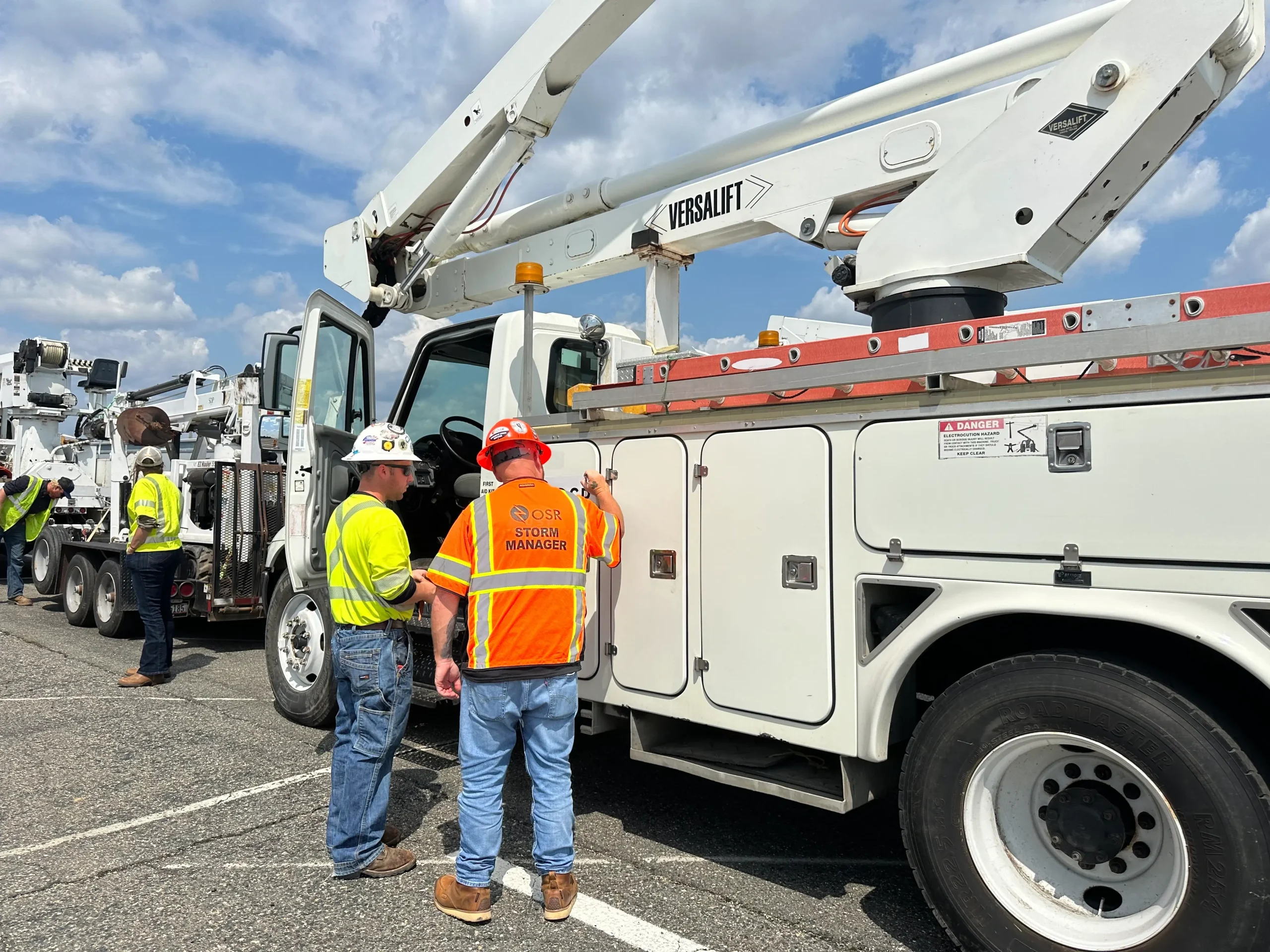
Utility aerial lifts aren’t interchangeable with general construction equipment. When a utility contractor deploys an aerial device for overhead distribution work, pole-mounted cable installation, or substation maintenance adjacent to energized conductors, the equipment has to be rated, certified, and configured for that specific environment. Voltage exposure, insulation class requirements, working reach specifications, chassis mobility in field conditions, and adherence to ANSI/SIA A92 standards and OSHA 1926 subpart V regulations all determine whether a rental unit can safely execute the work. The distinction between utility-rated aerial devices and general construction lifts is a critical safety and operational boundary. ATK Logistics provides aerial lift rental for utility contractors across the Southeast, with equipment maintained to utility standards and available when you need rapid deployment for distribution work, pole maintenance, or storm restoration. Understanding what makes utility aerial equipment different from general construction lifts prevents costly field problems, safety violations, and operational delays.
—
Utility Aerial Lifts vs. General Construction Lifts: The Critical Distinction
The fundamental distinction matters more than rental convenience. General construction lifts are engineered for building trades—indoor use, concrete surfaces, controlled environments, non-energized work zones. Utility aerial work operates in a different category entirely, with technical requirements and regulatory frameworks that don’t apply to construction trades.
Insulation ratings and electrical certification standards. Utility line work adjacent to or near energized conductors requires aerial devices with documented insulation class ratings that match the voltage environment. Category A work zones (within arm’s reach of energized lines) demand equipment rated for that voltage class. Category B and C work zones have different clearance and insulation requirements. A general construction lift doesn’t carry those ratings, and deploying non-insulated equipment in a utility voltage environment creates immediate safety exposure and regulatory violation. Every rental unit deployed for utility work must include current certification documentation confirming insulation class, date of last test, and voltage rating. That certification is non-negotiable. ANSI/SIA standards specify that insulated boom components must be tested to 100,000 volts for specified minimum durations, and that certification must be renewed annually or biannually depending on manufacturer specifications and field usage intensity. Outdated or missing insulation certification means the unit cannot legally be deployed in Category A or B work zones.
Working height and horizontal reach specifications under load. Distribution line work occurs at specific heights determined by structure class, conductor configuration, and local utility standards. An aerial lift that lacks adequate working height creates operational limitations that aren’t solvable in the field. Horizontal reach matters equally—work at the correct angle and reach distance is as important as correct height. Undersized equipment doesn’t just cost time; it creates safety exposure when crews attempt workarounds. A utility-grade rental includes detailed specifications for rated working height and horizontal reach, measured from the base of the unit under load. Load-rated specifications are critical because capacity decreases as reach extends. A unit with adequate height at full vertical extension may have insufficient capacity at maximum horizontal reach, limiting the work that can be performed.
Chassis mobility and site-access capability for field terrain. Utility job sites are rarely located on level, paved surfaces. Right-of-way corridors, rural access roads, storm-damaged terrain, and post-event cleanup environments require chassis capability that many scissor lifts and standard boom lifts simply don’t provide. Self-propelled units with four-wheel drive capability, All-Terrain Lift (ATL) platforms, or trailer-mounted aerial devices with appropriate tow vehicles are the better match for actual field conditions. Ground clearance, tire type, and drivetrain configuration determine whether a unit can access the work zone without getting stuck or becoming immobilized. A rental provider should specify chassis type, ground clearance, and access limitations before deployment. Units with single-axle drive may navigate gravel roads but won’t access soft ground or severely rutted terrain; tandem-drive or four-wheel-drive units provide better rough-terrain capability.
Stability, outrigger functionality, and working conditions compliance. Utility work at height on uneven terrain requires proper stabilization. Outrigger systems must be functional and deployed according to manufacturer specifications. Stability is governed by GVWR (gross vehicle weight rating), outrigger extension, and boom angle during operation. Units that haven’t been properly serviced or inspected for outrigger function create tipping hazard and are unsafe. Rental agreements should include certification of current outrigger status and stabilization system functionality. Compromised outrigger hydraulics or worn bearing surfaces create instability that can result in tip-over during boom extension or load handling.
Daily inspection checklist and pre-deployment verification procedures. OSHA 1926 subpart V requires daily inspection of aerial lifts before use. Rental units should arrive with documented pre-delivery inspection, but the operator’s crew performs the daily checklist on-site before work begins—checking boom extension, controls, hydraulic function, bucket condition, and emergency descent systems. Any unit that fails daily inspection doesn’t go to work. Clear documentation of inspection procedures and what constitutes a failed unit prevents disputes mid-job and ensures safety compliance.
—
How Utility Contractors Use Aerial Lift Rental: Key Deployment Scenarios
Scheduled infrastructure maintenance and vegetation management programs. Substation work, transformer maintenance, pole-top hardware installation, and vegetation clearance for overhead distribution all require aerial access. When a contractor’s owned fleet is already committed to other projects or maintenance schedules, rental fills the immediate access need without disrupting ongoing operations. Rental duration for scheduled work is often predictable—allowing for advance booking and logistics coordination. Contractors can plan maintenance windows knowing they have guaranteed aerial lift access.
Storm restoration and damage assessment after major weather events. Post-storm deployment for damage assessment, wire routing, damage repair, and infrastructure rebuild is the highest-intensity rental use case. Storm activation demands rapid mobilization, equipment availability, and pre-arranged logistics. Many Southeast utilities experience Category 3+ hurricane exposure, which means concentrated damage windows from June through November. Contractors with pre-event rental agreements are positioned to activate within hours; those calling for rental cold are often queued behind others and face lead-time delays. Storm response contractors understand that equipment availability becomes the bottleneck during active restoration periods.
Major construction phase supplementation for large-scale projects. Large distribution construction projects—transmission rebuild, distribution circuit modernization, substation expansion—generate sustained aerial work that can exceed a contractor’s owned-fleet capacity. Project-term rental arrangements for 30, 60, or 90 days allow contractors to staff multiple work fronts without permanently expanding owned equipment inventory. Multi-unit coordination becomes critical on large projects; a rental provider with adequate fleet depth can support multiple concurrent work sites.
Specialized access requirements and vendor-specific configurations. Some projects require specific aerial access configurations—particular working height, horizontal reach geometry, insulation class, or boom type—that aren’t standard in a contractor’s fleet. Requesting a unit with those exact specifications is the rental advantage; contractors avoid the capital and depreciation exposure of purchasing equipment used on a single project. Specialized boom configurations (insulated vs. non-insulated, telescoping vs. articulating) are examples where rental flexibility delivers cost efficiency.
Regional deployment and equipment repositioning for geographic expansion. Contractors expanding service territory or opening new operating areas may prefer to rent utility-grade aerial devices before committing to owned-equipment positioning. Rental removes the capital requirement for geographic expansion and allows contractors to validate workload before making long-term equipment investments.
—
How the Equipment Rental Process Works: Step-by-Step
Step 1: Define the work requirements and detailed equipment specifications. Before contacting a rental provider, contractors clarify the specific work to be performed—what is the working height, horizontal reach distance, voltage environment (Category A/B/C work zone), terrain conditions, and project timeline. Is the work insulated-boom required or non-insulated acceptable? Is the work three days or three weeks? What chassis type will access the site? Are there any special material handling requirements or environmental constraints? Clarity on these details before initial contact accelerates the quote process and ensures the right equipment is discussed. Contractors should have specific technical requirements documented before requesting quotes.
Step 2: Request a detailed quote and comprehensive equipment specification sheet. The rental provider should respond with specific unit details: exact model, rated working height, horizontal reach, GVWR, outrigger configuration, insulation class and certification date, maintenance status, delivery lead time, and all-inclusive daily/weekly/monthly rates. The quote should specify what’s included (fuel, delivery, operator support) and what costs extra (driver positioning outside the service area, extended delivery distance, damage waiver). A comprehensive quote prevents hidden charges and billing surprises.
Step 3: Verify insulation certification and review complete maintenance status. Before accepting the quote, request documentation of insulation class certification and the date it was last tested. Request the maintenance record for the specific unit being quoted—when was the last PM, what work was completed, and what’s the current condition status. If the unit doesn’t have current documentation, request an alternative unit. This step prevents accepting undersized, non-insulated, or under-maintained equipment that will cause problems in the field. Request maintenance records covering the past 12 months to ensure proactive maintenance has been performed.
Step 4: Arrange delivery logistics and confirm detailed mobilization timeline. Once the unit is confirmed, coordinate delivery date, time window, and delivery location. Confirm whether the rental provider delivers or the contractor arranges transport. If mobilization is multi-state or long-distance, confirm fuel responsibility and per-mile charges. A clear delivery timeline prevents site surprises and allows the contractor to stage crews correctly. Confirm whether the provider includes positioning assistance on-site or whether the contractor is responsible for locating the unit in the work zone.
Step 5: Conduct comprehensive pre-deployment inspection and formal acceptance. When the unit arrives, the rental provider’s representative and the contractor’s crew conduct a joint walk-around. The provider certifies that the unit is in rental condition; the contractor performs the daily inspection checklist before accepting the unit. Any discrepancies or concerns are documented and addressed before the unit is considered accepted and ready for work. This formal acceptance process creates a paper trail and prevents disputes about unit condition.
Step 6: Confirm operator qualifications and conduct operational briefing. Aerial device operation requires certification. CDL Class A or B operators, certification on the specific equipment type, and current medical certification are standard requirements. The rental provider should confirm operator qualifications before the unit is released. Many rental providers provide a brief operational orientation on the specific unit’s controls and quirks—this is valuable if the crew isn’t familiar with the exact model. Document operator training and briefing in rental records.
Step 7: Execute work with daily inspections and immediate maintenance reporting. During the rental period, the crew performs daily inspections per OSHA 1926 subpart V before each day’s work. Any equipment failures or concerns are reported to the rental provider immediately. Maintenance issues that arise during rental are addressed by the provider, not the contractor. Clear communication on maintenance responsibility prevents disputes. Operators should document daily inspection findings and report any developing issues immediately rather than deferring maintenance to the end of the rental period.
Step 8: Return the unit and process final billing and settlement. At the end of the rental term, the unit is returned to the rental provider’s location or a pre-arranged delivery point. Return condition is assessed; the contractor is not responsible for normal wear, but damage beyond normal wear incurs additional charges based on damage waiver terms. Final invoice is issued within a few days. Clarify damage waiver coverage and damage assessment procedures before returning equipment.
—
What to Verify Before Accepting a Rental Unit: Pre-Deployment Checklist
Insulation rating and documentation of current certification status. Confirm the insulation class rating, voltage rating, and date of the most recent insulation test. The test date is critical because insulation integrity degrades over time and must be re-certified at intervals specified by the equipment manufacturer. Non-insulated equipment should not be accepted for utility work in energized environments. Documentation should be provided before acceptance, and a copy should be retained for compliance records. Verify that the certification test was performed by a qualified testing laboratory and that the test certificate includes specific voltage ratings and test duration.
Working height and horizontal reach specifications under rated load conditions. Verify the exact working height and horizontal reach the unit can deliver under rated load. These are load-rated specifications—they should match or exceed the work requirements. Operating the unit beyond rated specs is unsafe and violates OSHA requirements. Request load charts showing capacity reduction as reach extends, and confirm that your specific work scenario falls within rated parameters. Document these specifications in the work order to ensure operators understand equipment limitations.
Maintenance records and current preventive maintenance status. Review the maintenance history of the specific unit. When was the last preventive maintenance performed? What work was completed? Is the unit current on all required services? A unit with deferred maintenance creates risk; if maintenance records are unavailable or sparse, request an alternative unit. Request detailed PM records covering the past 12 months, including dates, scope of work, and technician information.
Chassis mobility and site-access suitability for terrain conditions. Assess the unit’s chassis capability relative to the site conditions. Can it navigate the access roads and terrain? What’s the ground clearance and width? If site access is marginal, discuss modifications or alternatives with the rental provider before committing. Rough terrain or restricted access may require trailer-mounted options or specialized positioning procedures.
Outrigger functionality and comprehensive stability system status. Verify outrigger operation—are all outriggers functional and properly hydraulic? Is the stability system responsive? Request demonstration of outrigger deployment if there’s any concern. Marginal outrigger function is a show-stopper for safe operation. Test outrigger extension, retraction, and locking under the observation of the rental provider’s technician.
Operational controls and crew familiarization requirements. Have the crew review the operator interface. Are control functions intuitive, or is there significant learning curve? If the crew has used the specific model before, this is faster; if it’s unfamiliar, factor in additional setup time for the first day. A brief operational briefing from the rental provider’s tech on the specific unit is standard and valuable. Document control configuration and any non-standard features in the rental agreement.
Emergency descent systems and integrated safety equipment functionality. Confirm that emergency descent systems, bucket-level controls, and safety equipment are all functional. Check that all safety notices and operational placards are in place and legible. Test emergency descent operation under supervised conditions before deploying to productive work.
A five-minute pre-deployment checklist before beginning work prevents mid-job surprises and operational delays.
—
What to Look For in a Utility Equipment Rental Company
Utility-specific equipment and insulation-rated inventory configuration. The rental company should clearly state that they maintain utility-grade aerial lifts with current insulation certification. General equipment rental houses often don’t have equipment suited for utility voltage environments. A utility-focused rental provider maintains insulated boom equipment specifically for this work. Ask about the percentage of their fleet that’s insulation-certified and how they refresh insulation testing to maintain current certifications.
Current maintenance records and documented pre-deployment inspection protocols. Verify that the rental company has a documented maintenance program and provides pre-deployment inspection documentation with every rental. Equipment that’s minimally maintained isn’t worth the downtime and risk. Ask how often major PMs are performed, whether units are inspected before going out, and whether maintenance records are available upon request. Request to see PM schedules and track maintenance intervals—units on 250-hour or annual PM intervals are better maintained than those on 500-hour or deferred-service schedules.
Regional fleet depth and storm-season readiness posture. For Southeast contractors, fleet depth during storm season is critical. A rental provider with limited equipment doesn’t have capacity when demand is highest. Ask whether the company maintains pre-season inventory agreements, whether they have multiple units to avoid outages if one unit fails, and whether they activate dedicated storm response teams during hurricane season. A provider with 3-5 aerial lift units has limited capacity; one with 15+ units has meaningful fleet depth.
Clear communication on rates, terms, and detailed operational support. The rental company should provide transparent pricing—daily rates, weekly rates, monthly rates, all-inclusive definitions, and what costs extra (delivery, damage waiver, extended hours). Vague pricing creates surprises. Equally important is responsiveness: when a crew has a question mid-job, can they reach someone? When equipment malfunctions, is there rapid dispatch support? Ask about 24/7 contact availability during active contracts.
Delivery capability and geographic reach across the Southeast. Can the rental company deliver to your job sites? What’s the mobilization lead time for your area? A rental provider based 500 miles away with infrequent Southeast deliveries isn’t as valuable as a regional provider with local equipment positioning and rapid deployment capability. Ask about their service territory and whether they maintain regional distribution centers.
Operator qualification requirements and documented safety protocols. The company should require documentation of operator certification, CDL, and currency. They should ask about the work environment and confirm that you understand the safety requirements. A rental company that doesn’t ask questions about operator qualifications or work environment is cutting corners on safety.
—
Insulation Ratings and Voltage Categories: Critical Technical Differences
Utility work in different voltage environments requires different equipment ratings, and these distinctions aren’t negotiable safety considerations.
Category A work zones (arm’s reach of energized conductors). Work within arm’s reach or potential contact with energized conductors requires insulated aerial devices. The insulation class must match or exceed the voltage present. 12kV work requires different insulation than 35kV work. Equipment insulation is tested to specific voltage standards and certified; the certification date matters because insulation degrades over time. Equipment must be re-tested periodically; outdated certification means the equipment can’t be used for Category A work. Insulation ratings are typically expressed in kilovolts (kV): 7.5kV, 12kV, 15kV, 25kV, 35kV, and higher. The rating must match or exceed the system voltage in the work zone.
Category B work zones (within tool’s reach of energized conductors). Work with conductive tools within reach of energized conductors requires insulated devices. Insulation requirements are slightly lower than Category A but still critical. Arm’s reach distances vary by regulation but typically range from 4-6 feet depending on system voltage. Tool reach extends beyond arm’s reach, requiring specific distance clearances. Tool reach calculations account for hand tools, probe sticks, and equipment the operator might extend beyond their body position.
Category C work zones (outside reach of energized conductors). Work outside the reach of energized conductors has lower insulation requirements, but many contractors use insulated equipment regardless for safety margin and operational flexibility. Category C work zones provide greater latitude in equipment selection but still require safe positioning practices.
Non-insulated aerial devices should not be deployed into Category A or B work zones under any circumstances. Deploying undersized or non-rated equipment is a regulatory violation and creates electrocution hazard.
—
Storm Activation and Pre-Season Rental Agreements: Positioning for Peak Demand
Storm season in the Southeast is concentrated: June through November, with peak damage windows in late August through October. Contractors who rely on rental equipment for storm response should establish pre-season relationships with rental providers in March or April—before storm demand escalates and equipment availability becomes constrained.
Pre-season rental agreements and capacity reservation. Many rental providers offer reserved capacity arrangements—the contractor pays a modest seasonal hold fee (typically $500–$2,000 per unit for the season) and has guaranteed access to specified equipment during the June–November window. This prevents being outbid by other contractors or facing availability delays when the system is activated. Pre-season fees are a cost of ensuring availability when it matters most.
Detailed activation protocols and mobilization procedures. Clear protocols should be established before the season: How is the rental activated? What’s the typical mobilization window (4 hours, 24 hours)? Where can equipment be delivered? What’s the contact procedure for emergencies? Having this worked out in advance accelerates response when an event occurs. Document emergency contact information and establish 24/7 availability during the storm season.
Multi-unit coordination and backup equipment redundancy. Large restoration events require multiple aerial lifts. Pre-season agreements should specify whether the provider can guarantee 2, 3, or more units available simultaneously during the event window. Backup equipment and redundancy matter in high-demand periods. Confirm whether the provider maintains spare units or coordinated relationships with other providers for surge capacity.
—
Operating Costs and Budgeting for Aerial Lift Rental: Rate Structure and Economics
Daily rates and typical Southeast market pricing. Standard daily rental rates for utility-grade aerial lifts in the Southeast range from $300–$600 per day depending on the equipment specs and local market conditions. Rates typically include fuel, delivery within the service area, and standard maintenance during the rental period. Overtime for extended hours (16-hour days, 24-hour standby) may incur surcharges. Rates vary by specific equipment: telescoping booms cost more than articulating booms; insulated units command premium rates over non-insulated.
Weekly and monthly discount structures and negotiated rate reductions. Weekly rates (7 days) often carry a 10–15% discount off daily rates; monthly rates (30 days) may be 30–40% lower than daily rates. Long-term project rentals (60–90 days) may qualify for further discounts. Negotiating multiple-month rates for ongoing construction projects is standard practice. Multi-unit rentals often qualify for volume discounts.
Delivery charges and extended mobilization fees. Delivery within the core service area is typically included; delivery beyond the service area (100+ miles) may incur additional charges at $2–$5 per mile or flat fees for long distances. Multi-state delivery or equipment positioning at remote sites incurs mobilization costs. Confirm whether weekend or emergency delivery carries surcharges.
Damage waiver and comprehensive insurance options. Rental providers typically offer optional damage waiver coverage (insurance) at 8–15% of the weekly rental rate. With waiver coverage, normal wear and accidental damage is covered by the rental company. Without waiver coverage, the contractor is responsible for damage charges. Contractors should verify whether their general liability insurance covers rental equipment or whether the damage waiver is necessary. Review damage waiver terms before committing.
Standby rates and storage fees for extended holds. If a rental unit is held (booked but not fully deployed), some providers charge reduced standby rates or storage fees for extended holds. Clarify those terms before committing to a long booking window with uncertain start dates.
—
Regulatory Compliance and Required Documentation
OSHA 1926 Subpart V requirements and daily inspection procedures. OSHA regulations require daily inspection of aerial lifts by the operator before use. The rental provider should provide inspection checklists and documentation of pre-deployment inspection. During the rental period, the contractor’s operator is responsible for daily pre-use inspection and must document any issues. Non-compliance with daily inspection requirements is an OSHA violation.
ANSI/SIA A92 standards compliance and certification. Aerial lifts must be designed and maintained to ANSI standards. Rental providers should state that their equipment is ANSI-compliant and provide certification documentation. Equipment that doesn’t meet ANSI standards shouldn’t be accepted.
Insulation testing and annual certification renewal. Insulated booms must be tested annually for insulation integrity. Certification documentation should accompany every rental. Equipment without current certification should not be accepted. Request the test date and ensure certification is valid for your rental period.
Load rating and capacity documentation specifications. Each unit should include documentation of load capacity, stability ratings, and GVWR. Operating outside rated capacity is unsafe and a regulatory violation. Confirm that your specific work load doesn’t exceed rated capacity at your required reach distance.
Operator certification and qualification verification. The operator must hold a valid CDL (Class A or B depending on unit GVWR), must be current on medical certification, and should have training on the specific equipment type. Many utilities require additional aerial lift certification beyond CDL; verify requirements before rental.
—
ATK Logistics: Aerial Lift Rental for Utility Work Across the Southeast
ATK Logistics provides aerial lift rental for utility contractors across the Southeast. Our fleet includes insulated boom lifts, telescoping boom units, and articulating bucket lifts rated for utility distribution work, pole maintenance, and storm restoration. Every unit is maintained to utility standards, certified for appropriate voltage environments, and available for rapid deployment. We understand the operational demands of utility line work and the accelerated timelines of storm activation. Pre-season rental agreements are available for contractors who want guaranteed access during peak demand periods. Our service includes pre-deployment inspection, operational briefing, and maintenance support throughout the rental period. Equipment specifications, maintenance records, and insulation certifications accompany every rental. We maintain regional fleet depth during storm season and support contractor mobilization across the Southeast.
Contact ATK Logistics to discuss aerial lift rental availability, pre-season agreements, or emergency equipment needs for your utility operation.
—
Related topics: rent a bucket truck, tooled bucket truck rental, bucket truck rental utility, digger derrick rental, bucket truck leasing, rent bucket trucks for a crew.