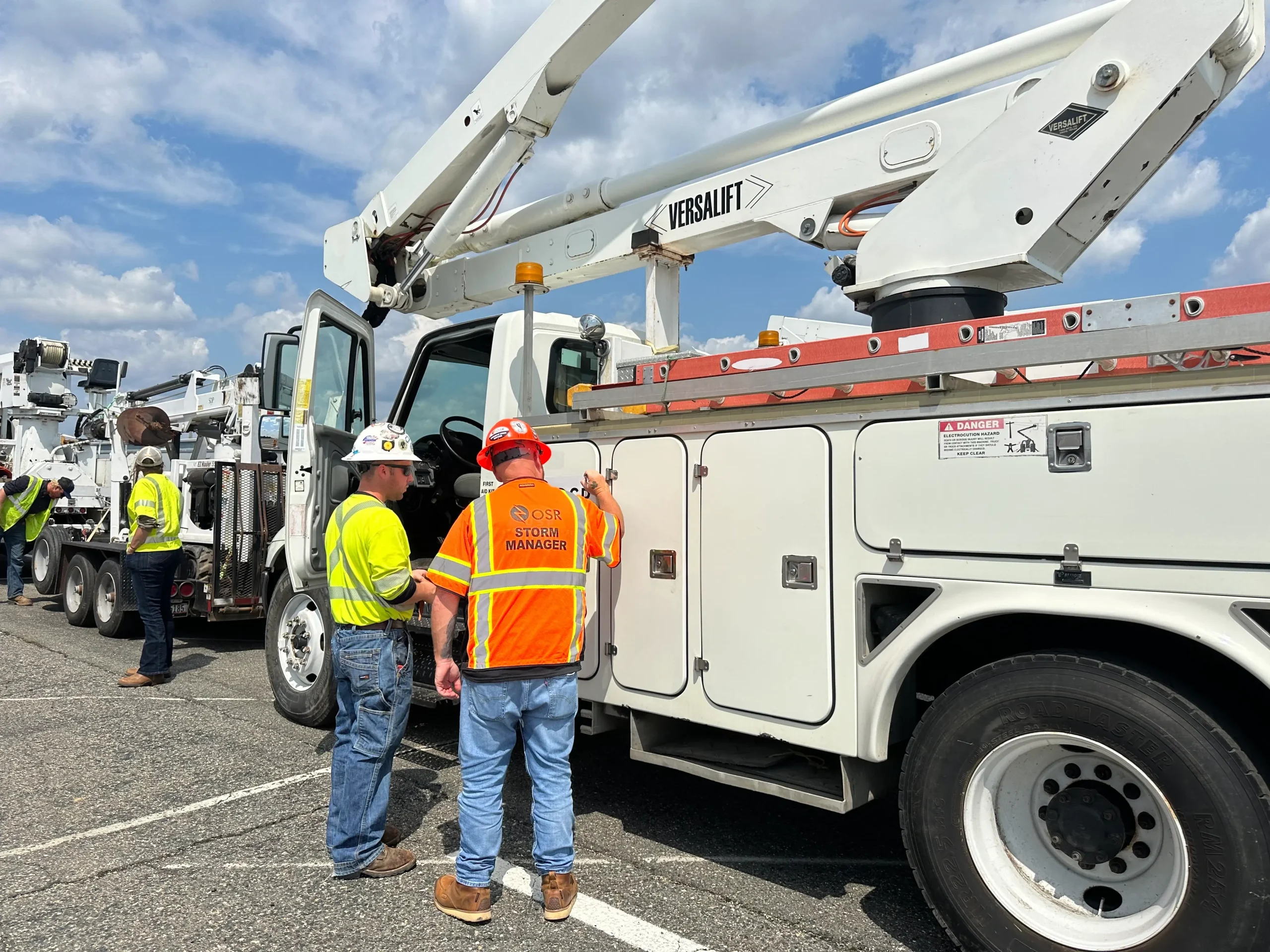
Pole setting and underground cable work is the structural foundation of distribution system construction. When a contractor needs a digger derrick without tying up capital in ownership, rental is the straightforward path — but only if the rental unit is the right specifications, properly maintained, and equipped with compatible tooling for the soil conditions and pole class being set. Digger derricks (also known as auger trucks or derrick trucks) are specialized equipment that perform two distinct functions: the auger digs the hole, and the derrick boom lifts and positions the pole. Both systems have to work together reliably, and both have to be maintained to operational standards. ATK Logistics provides digger derrick rental for utility line contractors across the Southeast, with equipment maintained for pole-setting and distribution construction work, available for project-term rental arrangements, and deployable for emergency restoration after major storms.
—
What a Digger Derrick Rental Should Deliver
Boom capacity and reach specifications for the pole class being set. Digger derricks are rated by maximum lifting capacity and boom reach. Pole setting requirements vary by pole class (40-foot Class 2, 60-foot Class 1, etc.), pole weight, and hardware load. The rental unit’s boom capacity must meet or exceed the maximum combined load (pole + cross-arms + hardware + insulators). Boom reach determines the positioning angle. A unit with adequate capacity but insufficient reach forces operational compromises. Request load-rated specifications — what is the maximum lifting capacity at various boom extension distances? This determines whether the derrick can actually set the pole for the specific project.
Auger configuration and compatible tooling for soil conditions. The auger digs the hole. Auger diameter and length vary by soil type, pole depth, and project specifications. Sandy soil, clay, rocky ground, and wet conditions all affect auger performance. Rental units should come with compatible auger tooling, or the tooling options should be clearly available and quickly obtainable. Mismatched auger sizing creates production delays and inefficiency. Request clarity on what auger sizes are available and how quickly alternatives can be obtained if field conditions differ from design expectations.
Equipment maintenance condition and hydraulic integrity. Hydraulic systems on digger derricks are under constant stress during pole setting. Pump wear, seal degradation, and hydraulic line integrity all determine reliability. A unit that fails mid-project creates serious schedule problems and site safety exposure. Request maintenance records: when was the last PM performed? What work was completed? What is the current condition status? Ask specifically about hydraulic system maintenance and any known issues. Don’t accept a unit with vague service history or deferred maintenance.
Chassis and site mobility capability for construction terrain. Digger derrick work happens on construction sites, right-of-way corridors, and rural access roads. A rental unit that can navigate those conditions and position itself without getting stuck or creating access problems is essential. Single-axle units are more mobile than tandem-axle; four-wheel drive improves terrain capability. Before committing to a rental, clarify the chassis type and assess whether it matches site conditions. A unit that can’t access the work becomes a liability and wastes resources.
Operator familiarization and control system usability. Digger derricks aren’t standardized across manufacturers. Controls vary, boom response differs, auger operation has nuances. If a crew isn’t familiar with a specific unit, factor in familiarization time before production starts. A brief operational orientation from the rental provider on controls, boom characteristics, auger operation, and safety procedures is standard and valuable. Budget extra time on the first day if the crew hasn’t operated that exact model.
Safety certification and load test documentation. Digger derricks should come with current load test certificates confirming the boom can safely lift rated capacity. Inspect documentation of most recent certification test. Units without current load testing should not be accepted.
—
When Digger Derrick Rental Makes Sense
Project-scale demand exceeding owned-fleet capacity. A contractor with steady owned-fleet coverage might need additional capacity for a large distribution project. Rental fills that gap without a new equipment commitment. The contractor pays per-day or per-week rates for the duration of the project; when the project is complete, the rental equipment goes back.
Geographic expansion and regional market entry. A contractor expanding into a new service area may prefer to rent digger derricks before committing to relocating or purchasing owned equipment in that geography. Rental removes capital requirement and allows the contractor to test sustained workload before making permanent positioning decisions.
Storm and surge work after major events. Pole replacement and infrastructure rebuild after hurricanes, ice storms, or other major damage events drives sudden demand for pole-setting equipment. Owned-fleet capacity is quickly overwhelmed. Rental is often the fastest path to additional capacity during emergency restoration.
Maintenance downtime and equipment continuity. When owned digger derricks are in for scheduled major maintenance, annual inspection, or unscheduled repair, rental bridges the gap and keeps production moving. Pre-established rental relationships with providers prevent scrambling when equipment goes down unexpectedly.
Short-term or one-off projects. A small project requiring only a few pole settings may not justify owned equipment. Rental is the cost-effective choice.
—
How the Equipment Rental Process Works: Step-by-Step
Step 1: Define the project scope and equipment specifications. Before contacting a rental provider, clarify the project scope: How many poles are being set? What pole class and average weight? What soil conditions? What hardware load (cross-arms, transformers, insulators)? What is the project timeline? Are there specific auger size requirements? Is the project in one location or multiple sites? Clarity on these details accelerates the quoting process and ensures the right equipment is discussed.
Step 2: Request a detailed equipment quote with load ratings and auger options. The rental provider should respond with specific unit details: exact model, maximum lifting capacity at various boom extensions, current auger configurations available, GVWR, most recent PM and load test dates, maintenance status, delivery timeline, and daily/weekly/monthly rates. The quote should include what’s provided (fuel, delivery, operator support, auger tooling) and what costs extra (alternative auger sizes, extended delivery distance, mobilization fees).
Step 3: Verify maintenance records and load test certification. Request documentation of most recent PM performed, what work was completed, and current condition status. Request the most recent load test certificate confirming the boom’s lifting capacity. If the rental provider can’t provide this documentation, request an alternative unit. Units with outdated or missing load test certification should not be accepted.
Step 4: Confirm auger compatibility and tooling availability. Clarify what auger sizes come standard with the unit. If your project requires a different auger size, ask how quickly alternatives can be obtained and what the cost is. Don’t accept a unit if you’re uncertain about auger sizing and tooling compatibility.
Step 5: Arrange delivery and coordinate site preparation. Once the unit is approved, coordinate delivery date, time window, and location. Confirm whether the rental provider delivers or you arrange transport. For multi-state or long-distance delivery, confirm fuel responsibility, per-mile charges, and delivery timeline. Coordinate with the project team on site preparation — access roads, staging area, ground conditions.
Step 6: Conduct pre-deployment acceptance and operational briefing. When the unit arrives on-site, conduct a joint walk-around with the rental provider’s representative. Confirm the unit is in the advertised rental condition. Test boom articulation, auger function, hydraulic operation, and controls. Request an operational briefing on the specific unit’s characteristics, auger operation, safety procedures, and any known quirks. Document the unit’s arrival condition.
Step 7: Execute pole-setting work and monitor equipment. During the rental period, operate the unit per the rental agreement and manufacturer procedures. Monitor hydraulic performance, auger function, and boom stability. Any mechanical issues, hydraulic leaks, or operational concerns should be reported to the rental provider immediately. Maintenance and repairs are the rental provider’s responsibility, not the contractor’s. Don’t attempt field repairs.
Step 8: Return the unit and process final settlement. At the end of the rental period, return the unit to the rental provider’s facility or a pre-arranged location. The unit is inspected for damage beyond normal wear. The contractor is not responsible for normal operational wear, but damage from misuse or accident incurs charges (depending on damage waiver coverage). Final invoice is issued within a few days.
—
What to Look For in a Digger Derrick Rental Provider
Utility-specific fleet and distribution construction experience. The rental provider should specialize in utility work and have digger derricks configured for pole-setting and distribution construction. Ask whether they rent to utility contractors regularly, what their fleet size is, and whether they have experience with different pole classes and soil conditions. Providers without specific utility experience may not understand the nuances of pole-setting equipment.
Current maintenance records and load test certification. Verify that the rental provider performs regular preventive maintenance and maintains current load test certificates on all derrick units. Ask how often major PMs are performed, what maintenance intervals are used, and whether load testing is done annually or biannually. Request to see load test certificates for the specific unit you’re renting.
Auger tooling inventory and quick-change capability. The rental provider should have multiple auger sizes available or a system to quickly obtain alternative augers if field conditions differ from the project plan. Ask what auger options are standard, what the lead time is for non-standard sizes, and whether additional auger rental fees apply. Flexibility on tooling is important when field surprises occur.
Equipment specifications and transparent quoting. The rental provider should provide detailed equipment specifications: boom capacity at various extensions, auger configurations, GVWR, dimensions, and weight. Quotes should be clear and comprehensive. Vague specifications or unclear pricing suggest the provider doesn’t have specialized equipment knowledge.
Operational support and rapid response to mechanical issues. When equipment malfunctions mid-project, can you reach someone quickly? Is there rapid dispatch support? A provider that takes 24+ hours to respond to a hydraulic failure or auger malfunction creates project impact. Ask about 24/7 support availability during active rentals.
—
Digger Derrick Specifications and Load Ratings
Boom capacity and load rating at variable reach. Maximum lifting capacity is given at boom extension distances — capacity at 20 feet reach, 40 feet reach, etc. Capacity decreases as reach increases (mechanical disadvantage). Request the detailed load chart showing capacity at various reach distances. Confirm that the maximum combined pole + hardware load doesn’t exceed rated capacity at the reach distance your project requires. Operating beyond rated capacity is unsafe and damages equipment.
Auger diameter and length specifications. Auger diameter ranges typically from 12 inches to 36+ inches. Auger length determines hole depth — pole specifications usually call for specific depth (8–12 feet depending on pole class and local standards). Request the auger sizes available and confirm they match your project specifications. Auger sizing affects drilling speed and production rate.
GVWR and chassis weight rating. GVWR (gross vehicle weight rating) determines the maximum total weight the derrick truck can carry. This affects trailer-towing capability and terrain access. Know the GVWR before committing to the rental.
Hydraulic system capacity and pressure specifications. Hydraulic flow (measured in gallons per minute) determines auger drilling speed. Hydraulic pressure determines boom lifting force. Higher-capacity hydraulic systems perform faster for large pole-setting projects. Request specifications on hydraulic system capacity.
—
Pole-Setting Production and Operational Efficiency
Digging time and auger performance. Soil conditions directly affect digging speed. Sandy soil drills fast; clay and rocky ground slow progress. Auger sizing (larger augers can handle larger poles but drill slower) affects production. A unit with marginal auger sizing creates bottlenecks. Clarify expected drilling times for your soil conditions before committing to a rental. If unsure, request a trial or sample site assessment.
Pole-setting process workflow. Digging the hole, positioning the derrick, raising and positioning the pole, setting the pole true, and backfilling create the workflow. A derrick operator experienced with the specific unit’s controls minimizes positioning time. Budget setup time if the crew isn’t familiar with the unit.
Multiple-day and multi-week project rental rates. For projects requiring consecutive pole-setting (multiple sites, multiple days), negotiate daily rates or weekly rates with volume discounts. Longer-term agreements (4+ weeks) often qualify for monthly rates at 30–40% discount from daily rates.
—
Soil Conditions and Auger Selection
Sandy and granular soil. Soft soils require larger augers to prevent slippage and bogging. Drilling is usually fast. Water content affects performance — dry sand drills fast; saturated sand can clog the auger.
Clay and cohesive soil. Clay drilling is slow due to friction. Smaller augers may suffice, but slower production is expected. High-water-content clay is particularly difficult.
Rocky and obstructed ground. Rock and subsurface obstructions slow or stop drilling. Request pre-site soil assessments if possible. Some contractors prefer rental units with larger hydraulic capacity for rocky terrain.
Seasonal and weather conditions. Post-rainfall or freeze-thaw conditions affect soil drilling. Frozen or saturated ground creates delays. Schedule pole-setting projects with soil conditions in mind.
—
Storm Restoration and Emergency Pole-Setting
Southeast contractors face concentrated storm exposure. Post-storm pole replacement can require 10–30 poles per site, across multiple damaged circuits, in a compressed deployment window.
Pre-season agreements for storm work. Contractors relying on rental digger derricks for storm response should establish pre-season relationships before March. Reserved capacity agreements allow contractors to activate equipment within hours when damage occurs.
Rapid mobilization and multi-unit coordination. Storm work often requires 2–3 digger derricks deployed simultaneously to multiple sites. Pre-season agreements should specify whether the provider can guarantee multiple units and coordinate logistics across damaged areas.
Operator availability and crew training. Storm deployments require trained operators. Pre-event agreements should address operator availability or whether crews must provide their own operators.
—
Operating Costs and Budgeting for Digger Derrick Rental
Daily rates. Daily rental rates for utility-grade digger derricks in the Southeast typically range from $350–$550 depending on boom capacity and equipment spec. Rates usually include fuel, delivery within the service area, and maintenance. Overtime for extended hours may incur surcharges.
Weekly and monthly discounts. Weekly rates (7 days) often carry 10–20% discounts off daily rates; monthly rates (30 days) may be 35–45% lower than daily rates. For projects exceeding 4 weeks, negotiate monthly rates.
Auger tooling and alternative sizing. Standard auger configurations are included in the rental rate. Alternative or non-standard auger sizes may incur additional rental fees ($50–$150 per day depending on size).
Delivery and mobilization fees. Delivery within core service area is typically included. Delivery beyond the service area (100+ miles) incurs charges of $2–$5 per mile or flat fees for multi-state delivery. Emergency or weekend delivery may incur surcharges.
Damage waiver and insurance. Damage waiver (insurance) is typically offered at 10–15% of weekly rate. With waiver, normal wear and accidental damage is covered. Without waiver, contractor is liable for damage charges. Verify your general liability policy covers rental equipment.
—
Regulatory Compliance and Safety Standards
OSHA requirements for digger derricks. OSHA 1926 subpart R governs crane and derrick operations. Units must be inspected daily, operated by qualified operators, and used only within rated capacity. Rental providers should provide documentation of compliance.
Load testing and certification. Load tests confirm boom capacity and safety. Tests should be conducted by qualified inspectors and documented. Current certificates should accompany every rental. Equipment without current load certification should not be accepted.
Operator qualifications and training. Digger derrick operators should have training and experience on the specific equipment type. Many utilities require operators to hold crane certifications or have documented training records. Confirm operator qualifications before rental.
Daily inspection and maintenance logs. OSHA requires daily inspection before use. Rental providers should provide documentation of pre-rental inspection. During the rental period, the operating crew is responsible for reporting any issues to the rental provider.
—
ATK Logistics: Digger Derrick Rental for Distribution Contractors
ATK Logistics provides digger derrick rental for utility distribution contractors across the Southeast, with equipment maintained to pole-setting standards and available for project-term, seasonal, and emergency deployment scenarios. Our fleet includes units sized for standard pole classes (40-foot through 80-foot) with boom capacity for typical distribution cross-arms and hardware loads.
We understand the operational demands of distribution construction and storm restoration work. Equipment is actively maintained, load-tested, and delivered with current certification documentation. Our service includes pre-delivery inspection, operational briefing on the specific unit, auger tooling options, and maintenance support throughout the rental period. Pre-season rental agreements provide contractors with guaranteed access during peak demand periods.
Contact ATK Logistics to discuss digger derrick rental availability, project quotes, or pre-season agreements for your utility construction operation.
—
Related topics: rent a bucket truck, tooled bucket truck rental, bucket truck rental utility, bucket truck leasing, aerial lift rental utility contractor, rent bucket trucks for a crew.