
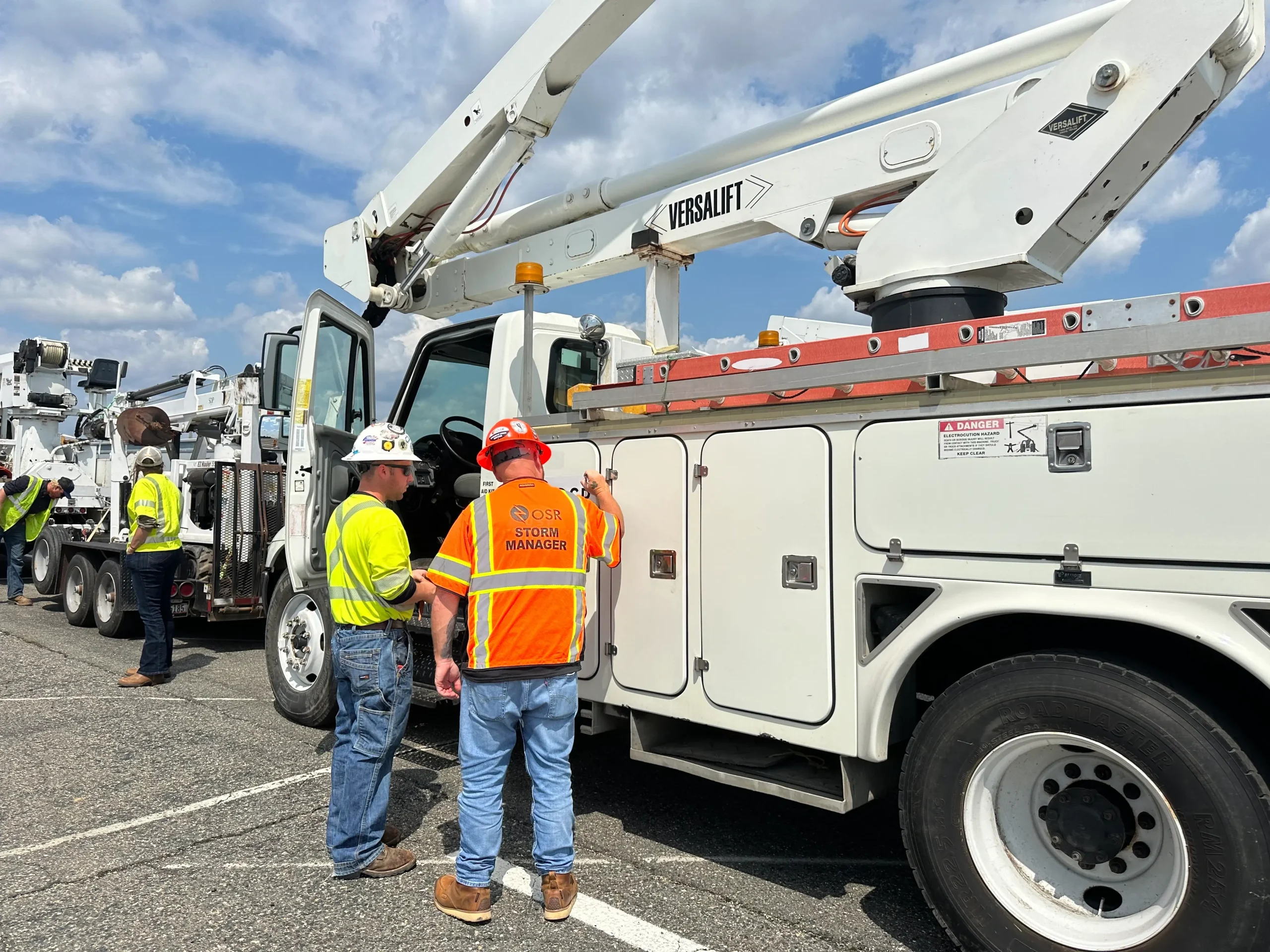
If your utility crew needs consistent access to bucket trucks but can’t justify a large capital purchase, leasing might be the perfect middle ground between short-term renting and long-term ownership. Bucket truck leasing typically costs $2,000–$4,000/month depending on equipment type and lease term, includes maintenance and insurance, and allows you to preserve cash flow while scaling your fleet. The decision to lease depends on your usage frequency (more than 150 days/year is the tipping point), company growth trajectory, and whether you prefer predictable monthly costs over ownership responsibilities. ATK Logistics provides lease-to-own programs across the Southeast and Gulf Coast for utility contractors who are ready to commit to regular equipment availability but want the flexibility to purchase or upgrade later.
What Is Bucket Truck Leasing?
Leasing a bucket truck is a medium-term rental arrangement (typically 24–60 months) where you pay a fixed monthly fee to use equipment that the lessor (rental company or finance company) owns. Unlike traditional renting (which is short-term and pay-as-you-go), leasing creates a contractual commitment with:
– Fixed monthly payments (24–60 months)
– Maintenance and insurance included in the lease
– Option to purchase at end of term (lease-to-own)
– Return of equipment or ownership transfer at lease end
– Standardized wear-and-tear acceptance
Leasing is common in industries where equipment ages predictably (construction, landscaping, utilities) and where teams need reliable assets without the burden of ownership.
Bucket Truck Leasing vs. Buying vs. Renting: A Detailed Comparison
Renting (Short-Term Equipment Access)
Best for: One-off projects, unpredictable demand, seasonal surges
– Cost: $150–$400/day (no long-term commitment)
– Term: Days to weeks
– Maintenance: Lessor responsibility
– Insurance: Typically included or minimal waiver
– Flexibility: High (cancel anytime)
– Usage break-even: 1–30 days/year
– Capital required: Zero
Advantages:
– Lowest upfront commitment
– Perfect for testing equipment before buying
– No long-term financial obligation
– Risk-free if project scope changes
Disadvantages:
– Highest daily cost per use
– Equipment availability not guaranteed during peak season
– No long-term cost savings
– No asset ownership at end
Leasing (Medium-Term Committed Access)
Best for: Growing teams, steady demand, 150–250 days/year usage
– Cost: $2,000–$4,000/month (typically 10–50% cheaper than renting over the same period)
– Term: 24–60 months
– Maintenance: Lessor responsibility (included)
– Insurance: Typically included
– Flexibility: Moderate (committed contract)
– Usage break-even: 150–250 days/year
– Capital required: Zero to small security deposit
Advantages:
– Predictable monthly budget
– 30–50% savings vs. daily rental over same period
– Maintenance and insurance included
– Lease-to-own programs allow purchase at end
– Fleet expansion without capital burden
– Equipment reliability (newer, well-maintained)
Disadvantages:
– Long-term financial commitment
– Penalties for early termination
– Mileage or usage restrictions may apply
– Wear-and-tear charges at lease end
– Less flexibility if business needs change
Buying (Long-Term Ownership)
Best for: High-utilization teams, 250+ days/year usage, 10+ year ownership horizon
– Cost: $80,000–$150,000+ (purchase); $2,000–$5,000/year (maintenance)
– Term: 10–20+ years
– Maintenance: Your responsibility
– Insurance: Your responsibility (typically $1,500–$3,000/year)
– Flexibility: Low (tied to asset depreciation)
– Usage break-even: 250+ days/year
– Capital required: $80,000–$150,000 upfront (or financed)
Advantages:
– Lowest per-day cost after break-even (years 5–10)
– Full control over equipment and customization
– Asset ownership and residual value
– No lessor restrictions on usage
– Tax depreciation benefits (consult accountant)
Disadvantages:
– Highest upfront capital requirement
– Maintenance and repair costs are your responsibility
– Depreciation risk ($10,000–$15,000/year for 10 years)
– Storage and insurance costs ongoing
– Obsolescence risk if technology changes
– Poor return on investment if equipment sits idle
When Does Leasing Make the Most Sense?
Leasing is the right choice if you answer “yes” to most of these questions:
1. Will you use the equipment 150+ days/year? (If yes, daily rental becomes very expensive.)
2. Do you plan to keep the equipment for 2–5 years? (If yes, a lease term aligns with your outlook.)
3. Is your company growing and you need to add fleet capacity? (If yes, leasing preserves cash for operations.)
4. Would you rather have predictable monthly costs than own an asset? (If yes, budget certainty is leasing’s strength.)
5. Do you value maintenance and insurance included in one payment? (If yes, lessor handles all maintenance.)
6. Are you unsure whether you’ll eventually want to buy? (If yes, lease-to-own gives you the option.)
7. Do you operate in multiple regions and want standardized equipment? (If yes, leasing allows fleet consistency.)
8. Would early equipment obsolescence be a risk to your business? (If yes, leasing transfers that risk to the lessor.)
If you answered “no” to more than 3 of these, you may be better off renting or buying.
The Bucket Truck Leasing Process: How It Works Step-by-Step
Step 1: Assess Your Usage & Fleet Needs
Determine:
– How many bucket trucks you’ll need
– Expected usage (days/year, seasonal peaks)
– Equipment specs (reach height, load capacity)
– 2–5 year business forecast (growth, contraction, market changes)
– Budget available for monthly payments
Step 2: Gather Financial & Operational Documentation
Prepare:
– Last 2 years of business tax returns or profit/loss statements
– Proof of commercial general liability insurance ($1M minimum)
– References from other utility contractors or vendors
– List of team members who will operate the equipment
Step 3: Request Lease Quotes from Multiple Providers
Contact 2–3 lessor companies. Ask for:
– Monthly lease payment (all-in, including maintenance and insurance)
– Lease terms available (24, 36, 48, 60 months)
– Lease-to-own option price (if available)
– Early termination penalties
– Mileage allowances and overage costs
– Wear-and-tear charges
– Insurance requirements and optional add-ons
– Equipment maintenance coverage (routine vs. emergency)
Step 4: Compare Total Cost of Ownership (TCO)
Calculate:
– Total lease payments over full term
– Maintenance and insurance (included or extra)
– Early termination risk (if you exit early)
– Residual value or buyout price (if lease-to-own)
– Compare to daily rental cost for the same period
– Compare to purchase cost + 5-year ownership expenses
Example lease comparison for a 50 ft bucket truck:
– Renting daily: $250/day × 200 days/year × 3 years = $150,000
– Leasing: $3,000/month × 36 months = $108,000 (savings of $42,000)
– Buying: $120,000 purchase + $3,500/year maintenance + $2,000/year insurance × 3 years = $135,500
Step 5: Verify Lease Terms & Conditions
Review the lease agreement for:
– Monthly payment amount and due date
– Lease start/end dates
– Equipment specifications (model, reach height, load rating)
– Maintenance coverage (routine hydro testing, hydraulic fluid, tires)
– Insurance requirements and liability allocation
– Mileage allowance (if applicable)
– Wear-and-tear definitions and excess charges
– Early termination penalties
– Lease-to-own options and buyout price
– End-of-lease return condition requirements
– Emergency breakdown and loaner truck policies
Step 6: Provide Insurance & Operational Information
Confirm:
– Your commercial general liability policy ($1M minimum)
– Workers’ compensation coverage
– Authorized operators (driver’s license, safety training)
– Primary use location and seasonal movements
– Any special equipment modifications needed
Step 7: Sign & Activate the Lease
Complete:
– Lease agreement signature
– Insurance certificate of insurance (lessor as additional insured)
– Equipment inspection and acceptance
– Operator safety training (if provided by lessor)
– Get copies of maintenance schedule and emergency contacts
Step 8: Operate Equipment Within Lease Terms
During the lease:
– Use equipment only as specified in the lease
– Stay within mileage allowances
– Schedule routine maintenance with lessor
– Report breakdowns immediately
– Keep equipment clean and well-maintained
– Document major incidents or damage
– Pay monthly lease payments on time
Step 9: Decide: Return, Upgrade, or Purchase at Lease End
Options at end of lease:
– Return the equipment (if standard lease)
– Upgrade to newer equipment (if you extend the lease)
– Purchase the equipment (if lease-to-own option was included)
– Replace with different equipment (if fleet needs changed)
– Evaluate new lease terms if usage continues
What to Look For When Choosing a Bucket Truck Lessor
Equipment Quality & Maintenance
– Utility-spec bucket trucks with lineman baskets (not construction-grade)
– Newer equipment (3–8 years old) to minimize breakdowns
– Complete maintenance program included: hydro testing, fluid changes, safety inspections
– Backup/loaner equipment if primary truck breaks down
– Regular equipment rotation to keep fleet fresh
Transparent Pricing & Flexible Terms
– Clear monthly lease payment (no hidden fees)
– Maintenance and insurance clearly included
– Lease term options (24, 36, 48, 60 months)
– Lease-to-own buyout price disclosed upfront
– Early termination options and penalties stated clearly
– Multi-unit discounts for crews leasing 3+ trucks
– Seasonal adjustment options for demand fluctuations
Geographic Reach & Deployment
– Service locations throughout Southeast and Gulf Coast
– Fast delivery and pickup (same-day or next-day)
– Local technician support for maintenance and breakdowns
– Experience with recurring seasonal demand
Insurance, Liability & Compliance
– Lessor carries excess liability insurance
– OSHA-compliant equipment with certifications current
– Safety training provided at lease start
– Clear liability allocation (lessor for maintenance, lessee for operating accidents)
– Workers’ compensation support documentation
Reputation & Responsiveness
– References from other utility contractors
– Fast turnaround on maintenance requests
– Responsive 24/7 emergency support
– Positive reviews from local businesses
– Track record with long-term leases
ATK Logistics offers lease-to-own programs with all these features, designed for utility contractors who need predictable fleet costs and the option to own over time.
Lease-to-Own Programs: How They Work
A lease-to-own program is a hybrid that combines leasing flexibility with purchase optionality. Here’s how it works:
1. Lease for 36–60 months with fixed monthly payments
2. Each payment builds equity toward a purchase price (typically 40–60% of equipment cost)
3. At lease end, you have three choices:
– Buy the equipment at the residual price (usually 40–60% of original cost)
– Return the equipment and walk away
– Refinance the residual into a new lease term
4. Monthly payments are lower than a loan would be, and maintenance is included
Example lease-to-own scenario:
– 50 ft bucket truck purchase price: $120,000
– Lease-to-own monthly payment: $2,800 × 48 months = $134,400 total
– Built-in purchase equity: $50,000
– Final buyout price: $70,000 (residual)
– If you buy, your total cost = $134,400 + $70,000 = $204,400
When lease-to-own makes sense:
– You’re unsure about long-term fleet needs
– You want to test equipment before committing to ownership
– You want lower monthly payments than a traditional lease
– You want the option to own if business grows
– You want to defer the large capital decision
The Hidden Costs of Bucket Truck Leasing
Watch out for these often-overlooked expenses:
Mileage Overage Charges
– Many leases include 10,000–15,000 miles/year
– Overage fees: $0.15–$0.25 per excess mile
– Long-distance storm response jobs can exceed limits quickly
– Negotiate higher mileage allowances upfront if you operate across regions
Wear-and-Tear Charges at Lease End
– Lessors charge for damage beyond “normal wear and tear”
– Bucket dents, boom scratches, tire replacements: $500–$2,000
– Hydraulic fluid leaks or rust: $1,000–$3,000+
– Negotiate exact wear-and-tear definitions in the lease
– Document equipment condition at lease start with photos
Early Termination Penalties
– Exiting a lease early typically costs 2–6 months of remaining payments
– Equipment returns may incur restocking or refinishing fees
– Negotiate penalty caps upfront (e.g., max 3 months’ payment)
Insurance & Liability Increases
– Leasing companies typically require $1M+ general liability
– If your insurance costs rise during lease term, that’s your burden
– Budget for possible insurance premium increases
Equipment Modifications
– Custom paint, decals, or equipment attachments may void warranty
– Any modifications typically cannot transfer to subsequent leases
– Plan modifications carefully to avoid loss of investment
Bucket Truck Leasing: Common Questions & Answers
Q: How much does it typically cost to lease a bucket truck?
A: Most utility bucket truck leases run $2,000–$4,000/month depending on reach height, lease term, and whether maintenance is included. A 48-month lease typically costs $96,000–$192,000 total.
Q: Is maintenance included in a bucket truck lease?
A: Yes, in most commercial leases. Routine maintenance (hydraulic fluid, filters, tire rotations) is included. Emergency repairs and breakdowns are covered by the lessor. Verify this in your lease agreement.
Q: Can I purchase the equipment at the end of a lease?
A: Many leases offer a lease-to-own option where you can purchase at a predetermined residual price. This is usually 40–60% of the original equipment cost. Ask about this option when getting quotes.
Q: What happens if the leased bucket truck breaks down?
A: Contact the lessor immediately. Most commercial leases include emergency support with a loaner truck sent to your job site or equipment picked up for repair. You continue making lease payments during repairs.
Q: Can I return a leased bucket truck early?
A: You can, but expect early termination penalties (typically 2–6 months of remaining payments). Some leases allow penalty-free returns after a specific milestone. Negotiate this upfront if early exit is a possibility.
Q: What’s the difference between a finance lease and an operating lease?
A: A finance lease (also called a capital lease) is a long-term arrangement (4–6 years) where you’ll likely purchase at the end. A operating lease (short-term) is typically 2–3 years, and you return the equipment. Finance leases offer ownership paths; operating leases offer flexibility.
Q: Can I lease multiple bucket trucks under one agreement?
A: Yes. Most lessor companies offer fleet lease programs with discounted rates for multiple units. If you’re leasing 3+ trucks, negotiate a fleet rate (typically 10–20% discount per unit).
Q: What insurance do I need for a leased bucket truck?
A: You typically need commercial general liability ($1M minimum) with the lessor named as additional insured. Workers’ compensation is required. The lessor usually carries excess liability. Your GL insurance policy should be sufficient.
Q: How long should I lease a bucket truck?
A: Lease terms are typically 24–60 months. A 48-month (4-year) lease is common because it balances monthly cost with equipment age. Longer terms = lower monthly payments but more wear-and-tear risk. Shorter terms = higher payments but newer equipment.
Q: What’s the best way to negotiate a bucket truck lease?
A: Get quotes from 2–3 lessors, specify your exact usage (days/year, mileage, crew size), ask for all-in pricing (maintenance + insurance included), inquire about fleet discounts, and negotiate mileage allowances and wear-and-tear definitions before signing.
Q: Can I lease a bucket truck for just 1 year?
A: Most lessors prefer 2–5 year terms. Some offer 12-month options but at a higher monthly rate. If you need short-term access, traditional renting is usually more economical.
Q: How does bucket truck leasing affect my business taxes?
A: Lease payments are typically tax-deductible as operating expenses. Finance leases may have different tax treatment. Consult your accountant about how leasing impacts your business structure and tax liability.
Q: What if my business needs grow and I need more bucket trucks mid-lease?
A: Contact your lessor and request an additional lease agreement. Many lessors allow you to add trucks to an existing lease with adjusted terms. Some offer fleet growth programs designed for expanding contractors.
—
Ready to explore bucket truck leasing for your crew? Contact ATK Logistics for lease-to-own programs and flexible lease terms across the Southeast and Gulf Coast. Talk to our team about finding the right leasing option for your business.
Related topics: rent a bucket truck, tooled bucket truck rental, bucket truck rental utility, digger derrick rental, aerial lift rental utility contractor, rent bucket trucks for a crew.