

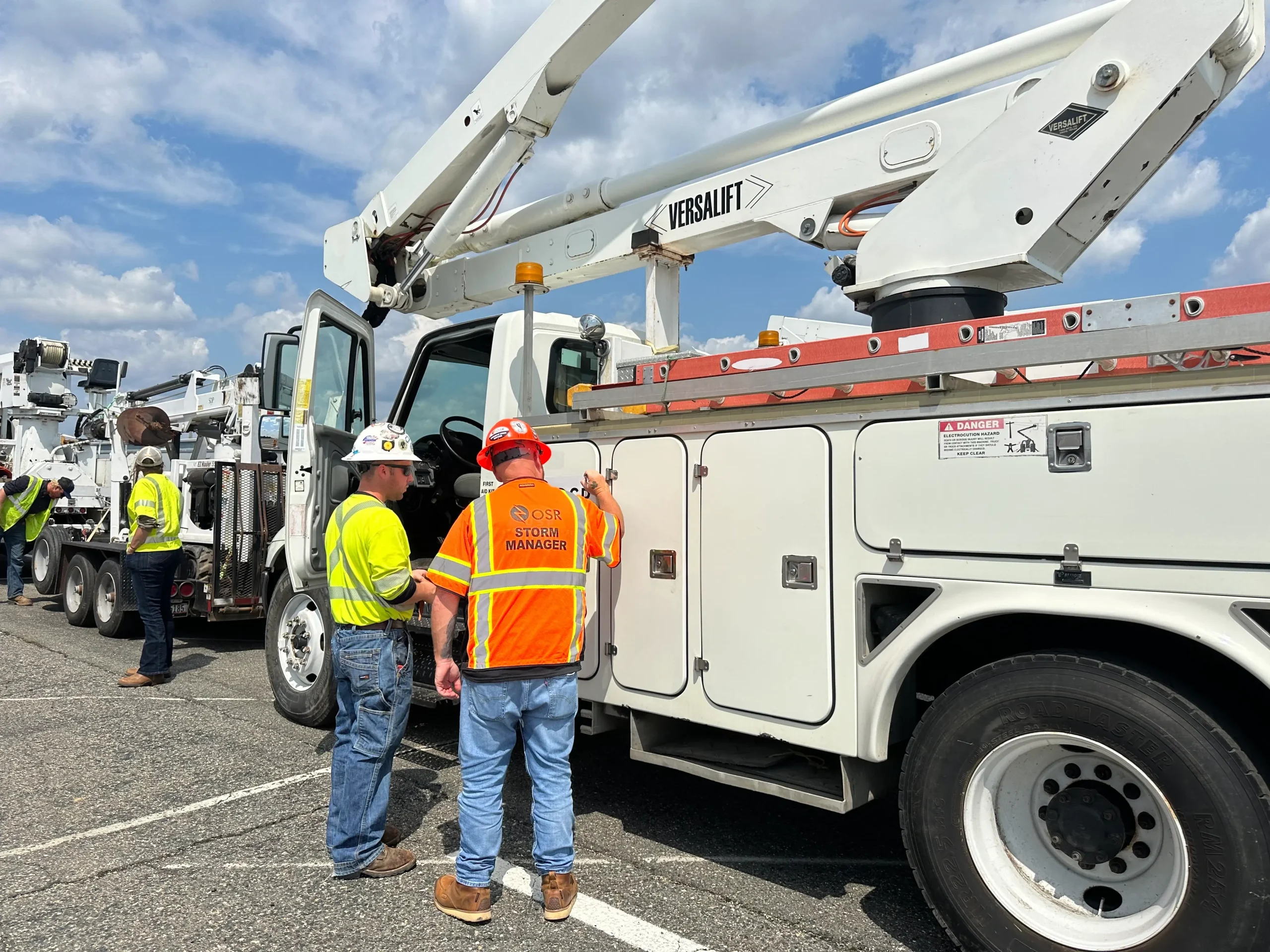
If you need to deploy multiple bucket trucks for a large storm restoration project, multi-crew right-of-way maintenance contract, or utility upgrade program, renting a fleet is faster, more cost-effective, and more flexible than building owned capacity. Fleet bucket truck rental typically costs $100–$200 per truck per day for multi-unit orders (compared to $250–$400 for single rentals), with 20–50% volume discounts for crews renting 5+ units. The key to successful multi-unit deployments is understanding how to specify equipment for different work types, coordinate logistics across job sites, establish “ready-to-work” standards so trucks arrive operator-ready, and partner with a rental company that has both breadth of inventory and local presence in your operating region. ATK Logistics specializes in fleet deployments for utility contractors across the Southeast and Gulf Coast, with same-day mobilization options for storm response and proven systems for multi-site equipment coordination.
Why Rent Multiple Bucket Trucks Instead of Building Owned Capacity?
Large utility contractors often face seasonal demand spikes (storm season, vegetation season, winter ice storms) that make owned equipment uneconomical. Bucket trucks are capital-intensive ($80,000–$150,000 per unit), depreciate quickly, and consume significant maintenance budgets even during idle periods. Rental offers several strategic advantages:
Rapid Deployment Without Capital Burden
– Access 5–20+ trucks in days instead of months to order/purchase
– Preserve cash flow for operations and crew payroll
– Avoid depreciation risk on equipment you’ll use sporadically
– Scale up or down month-to-month based on work pipeline
Flexibility to Match Project Scope
– Rent 45 ft buckets for utility line work in one location
– Rent 35 ft digger derricks for rural service truck applications elsewhere
– Return equipment when project ends instead of storing idle assets
– Test different equipment types before committing to purchases
Multi-Site Logistics & Coordination
– Rental companies handle maintenance and breakdowns fleet-wide
– Loaner trucks available if equipment fails mid-project
– Centralized billing (one invoice for 15 trucks across multiple counties)
– Equipment transported between job sites or stored centrally
Risk Mitigation During Demand Surges
– Storm season hits—you call the rental company and get trucks within 24–48 hours
– No risk of owned equipment being damaged or stranded mid-emergency
– Rental company’s insurance covers equipment; yours covers operations
– No commitment to long-term ownership if market softens
How Fleet Bucket Truck Rentals Work: The Process
Phase 1: Planning & Specification (1–2 weeks before deployment)
Step 1: Define Your Multi-Unit Needs
Determine:
– Total trucks needed by work type (e.g., 8× 45 ft boom trucks, 4× 35 ft digger derricks, 3× service trucks)
– Reach specifications for each location (overhead hazards, pole heights, tree canopy)
– Load ratings (personnel, tools, equipment weight in basket)
– Deployment locations (how many job sites, geographic spread, distance from rental yard)
– Timeline (storm response = same-day; planned project = 2–4 week ramp-up)
– Daily utilization (will trucks run all day, 5 days/week, or variable?)
Step 2: Assess Logistics & Site Preparation
Plan:
– Job site access — Are sites accessible for equipment delivery? Do you need crew to meet delivery trucks?
– Fuel refueling — Will you fuel trucks at a central yard or have lessor provide on-site fuel?
– Maintenance schedule — Who performs daily checks (fluid, tire pressure)? Are technicians available on-site?
– Communication — How will crews report mechanical issues or location changes?
– Insurance — Do you have GL coverage ($1M+) that covers all operators and locations?
– Parking & storage — Where will trucks be stationed between job sites?
Step 3: Request Fleet Quotes from Rental Companies
Contact 2–3 companies. Specify:
– Exact equipment list (model, reach height, load rating, quantity per type)
– Deployment timeline (immediate, 1–2 weeks, ongoing)
– Geographic coverage (all Southeast, or specific states)
– Daily/weekly/monthly rates for multi-unit orders
– Volume discounts (10+ units, 20+ units)
– Delivery and setup fees
– Fuel policy (included, full-to-full, or on-site refueling)
– Insurance and liability requirements
– Equipment backup/loaner availability
– After-hours support for emergency breakdowns
Step 4: Negotiate Fleet Rates & Terms
Ask for:
– Tiered volume discounts: 5 units = 15% off, 10 units = 25% off, 20+ units = 40% off
– Flexible rental periods: Rent for 4 weeks, return 2 trucks, keep 3 for 4 more weeks
– Fuel policy: Often included in multi-unit rentals (no separate tracking)
– Maintenance: Who pays for hydro testing, fluid changes, tire replacement?
– Operator training: Does rental company provide safety briefing at deployment?
– Emergency response: If a truck breaks down, how quickly is a loaner delivered?
– Early return credits: If you return equipment early, do you get a credit?
– Damage coverage: Is there a fleet damage waiver vs. per-unit waivers?
Step 5: Finalize Equipment Specifications & Logistics Plan
Confirm in writing:
– Delivery date, time, and location for each truck
– Fuel level on arrival (full tank vs. 1/2 tank)
– Any special equipment (outrigger pads, bucket extensions, communication equipment)
– Operator manual and safety documentation delivery method
– Emergency contact protocols (who to call if equipment fails)
– Return location and condition requirements
Phase 2: Deployment & Setup (1–3 days)
Step 6: Coordinate Equipment Delivery
– Rental company coordinates delivery schedule with your site managers
– Inspect trucks upon arrival: boom operation, hydraulic controls, fuel level, tire condition
– Photograph equipment condition (protects both parties if damage disputes arise)
– Distribute operator manuals and safety briefing documentation
– Assign specific truck serial numbers to specific crews/locations
Step 7: Operator Training & Safety Certification
Ensure:
– All operators have valid driver’s license
– Safety training certificates on file (OSHA bucket truck safety or equivalent)
– Each operator reads the specific equipment manual before first use
– Site supervisor briefs crews on daily safety checks and breakdown reporting
– Identify authorized emergency contact person at each job site
Step 8: Establish Daily Operations Protocol
Document:
– Daily pre-operation checks: Hydraulic fluid level, tire pressure, boom operation test, fuel level, bucket rope/basket condition
– Fuel management: Who refuels, where, how often? (Every 3 days? End of day?)
– Mechanical issue reporting: Phone number to call, required info (truck serial number, symptoms, location, crew size affected)
– Loaner truck coordination: If primary truck breaks down, where is loaner delivered? How long is downtime acceptable?
– Equipment movement: Can crews relocate trucks between sites, or does rental company coordinate moves?
Phase 3: Active Operations (weeks 1–4+)
Step 9: Monitor Equipment Performance & Utilization
Track:
– Daily utilization (hours in use per truck per site)
– Fuel consumption (identifies mechanical issues if consumption spikes)
– Maintenance requests and breakdown frequency
– Operator feedback (equipment reliability, comfort, control responsiveness)
– Any near-misses or safety incidents
Step 10: Manage Logistics & Equipment Moves
Coordinate:
– Planned transitions (reducing crew size after storm = return 5 trucks, keep 3)
– Emergency equipment swaps (one truck fails, loaner arrives, damaged truck goes to service)
– Fuel supply chain (ensure adequate fuel access at all sites)
– Maintenance window scheduling (hydro tests, fluid changes done during low-utilization periods)
Step 11: Communication & Problem Resolution
Maintain:
– Weekly check-ins with rental company about fleet performance
– Rapid notification of mechanical issues (call within 2 hours of discovering problem)
– Documentation of any equipment damage with photos
– Updates to crew assignments or location changes
Phase 4: Return & Closeout (week before/of return)
Step 12: Schedule Return & Plan for Equipment Transition
Determine:
– Which trucks are returning (and which may stay if contract extends)
– Return location (central yard, rental company parking lot, or on-site pickup)
– Return timeline (can you return all trucks same day or over 2–3 days?)
– Fuel level at return (typically must be full tank or 1/2 tank per agreement)
– Any equipment modifications that need removal before return
Step 13: Conduct Equipment Inspection & Document Condition
Walk through each truck with rental company representative:
– Inspect boom and basket for dents, scratches, cracks
– Check hydraulic hoses for leaks or damage
– Inspect tires for damage (sidewall cuts, flatspots)
– Review operational hour meter
– Photograph equipment condition and any wear
– Clarify what constitutes “normal wear and tear” vs. damage charges
Step 14: Clean, Refuel, and Return Equipment
Ensure:
– Each truck is cleaned of mud, grease, and job site debris
– Fuel tanks filled to agreed level
– All manuals, keys, and documentation returned
– Get signed return receipt confirming condition assessment
– Confirm that damage waiver covers expected wear (negotiate before returning if disputes)
Step 15: Settle Billing & Closeout
Verify:
– Final invoice covers only rental period (not overtime into next period)
– All volume discounts properly applied
– No surprise charges (fuel surcharges, overage mileage, damage assessments)
– Request copies of maintenance records if relevant for disputes
– Provide feedback to rental company (future reference, contract renewal)
Fleet Rental Pricing: What Multiple Bucket Trucks Actually Cost
Pricing for fleet rentals depends on equipment type, lease term, and order size:
Single-Unit Rental (baseline)
– 45 ft bucket truck: $250/day
– 35 ft digger derrick: $200/day
– Service truck: $150/day
5-Unit Fleet (20% volume discount)
– 45 ft bucket truck: $200/day per unit ($1,000/day for 5 units)
– 35 ft digger derrick: $160/day per unit ($800/day for 5 units)
– Service truck: $120/day per unit ($600/day for 5 units)
– Weekly rate (5 units mixed): ~$4,500 ($1,125/day)
10-Unit Fleet (30% volume discount)
– 45 ft bucket truck: $175/day per unit ($1,750/day for 10 units)
– 35 ft digger derrick: $140/day per unit ($1,400/day for 10 units)
– Service truck: $105/day per unit ($1,050/day for 10 units)
– Weekly rate (10 units mixed): ~$7,500 ($1,071/day)
20+ Unit Fleet (40% volume discount)
– 45 ft bucket truck: $150/day per unit
– 35 ft digger derrick: $120/day per unit
– Service truck: $90/day per unit
– Typical large deployment: $8,000–$12,000/week
Cost Optimization Tips
– Negotiate weekly/monthly rates (save 20–30% vs. daily)
– Bundle “ready-to-work” delivery and fuel (eliminates separate surcharges)
– Group fleet returns (avoid staggered pickup fees)
– Establish recurring deployment schedule (annual contracts get best rates)
– Use core equipment model (reduces complexity, rental company offers better pricing on standard specs)
“Ready-to-Work” Bucket Trucks: What That Means
In large deployments, “ready-to-work” means the truck arrives fueled, inspected, documented, and operator-ready. This standard includes:
Equipment Delivered in Operating Condition
– Full fuel tank (or agreed level)
– All hydraulic systems pressurized and tested
– Boom articulation and bucket controls responsive
– Outriggers stable and level
– Tires properly inflated and rated for load
Safety Documentation & Compliance
– Valid ANSI/IUEC certification (bucket truck is certified safe for personnel lift)
– Proof of last hydro test (within 12 months for utility work)
– Operator manual and safety information card in bucket
– Decals and load ratings clearly visible
– Emergency contact information on driver’s side window
Operator Training & Handoff
– Safety briefing (10–15 minutes) covering bucket truck operation, hazards, daily checks
– Demonstration of controls (boom up/down, bucket rotation, outrigger deployment)
– Walk-through of emergency shutdown procedures
– Operator signature confirming understanding and safe operation
– Rental company contact info for mechanical issues or emergencies
Maintenance Records & History
– Fluid change history (when last oil, hydraulic fluid, coolant change)
– Repair history from past 6 months (helps crews anticipate issues)
– Daily maintenance checklist for crew reference
– Rental company’s 24/7 emergency line for breakdowns
Special Equipment & Accessories
– Communication headsets (if multiple bucket trucks working on same project)
– GPS tracking device (if fleet-wide coordination required)
– Spotlight or work lights (for early morning/late evening jobs)
– Outrigger pads (for soft ground or asphalt protection)
What to Look For When Choosing a Fleet Rental Company for Multi-Unit Deployments
Inventory & Equipment Availability
– Fleet size: 50+ units to support 10+ unit deployments
– Equipment variety: multiple reach heights (35–75 ft), chassis types (boom trucks, digger derricks, service trucks)
– Equipment age: units 3–8 years old (good balance of reliability and modernity)
– Backup inventory: ensure backup units available if your primary equipment fails mid-project
– Geographic distribution: rental yards throughout your operating region (Southeast, Gulf Coast)
Deployment Speed & Logistics
– Same-day or next-day delivery capability (critical for storm response)
– Centralized coordination system (one point of contact for all 15+ trucks)
– Delivery to multiple job sites (can spread fleet across large geographic area)
– Fuel management options (on-site refueling, fuel cards, or included in rental)
– Equipment transport between sites (if crews need to relocate mid-project)
Fleet Pricing & Flexibility
– Transparent multi-unit discount structure (clear pricing at 5, 10, 20+ unit levels)
– Flexible rental periods (can add/return trucks without full contract renegotiation)
– Weekly and monthly rates better than daily (incentivizes longer commitments)
– Fuel included or clearly separated (avoid surprise surcharges)
– Damage waiver at fleet level (not per-unit, which can be expensive)
– Early return credits if you reduce fleet mid-contract
Maintenance & Support
– Included routine maintenance (hydraulic fluid, filters, tire rotation)
– 24/7 emergency breakdown line with guaranteed response time
– Loaner truck delivery within 4 hours (or crew downtime begins)
– On-site maintenance capability (technician visits job site if needed)
– Proactive equipment rotation (swap aging units for newer ones mid-contract)
– Weekly fleet health check-ins and performance reporting
Safety & Compliance
– All equipment OSHA-compliant with current certifications
– Safety training provided at deployment (30-minute briefing for operators)
– Documentation and compliance support (insurance requirements, hydro testing records)
– Incident reporting protocol and documentation
– Communication equipment provided (headsets for multi-crew coordination)
Reputation & References
– References from other utility contractors (especially storm restoration companies)
– 24/7 customer support with short response times
– Positive reviews from crews and site managers
– Track record with multi-unit deployments in Southeast/Gulf Coast region
– Flexibility and responsiveness to changing scope (add/drop trucks mid-project)
ATK Logistics provides all these capabilities with fleet deployments for 10–50+ truck requests, same-day mobilization for emergencies, and integrated logistics management across the Southeast and Gulf Coast.
Common Deployment Scenarios & Equipment Configurations
Scenario 1: Storm Restoration Response (72-hour mobilization)
Trigger: Hurricane or ice storm causes widespread outages
Fleet size: 15–30 bucket trucks
Equipment mix:
– 10× 50–65 ft boom trucks (primary climbing equipment for high-voltage line repairs)
– 4× 35 ft digger derricks (secondary climbing for lower-voltage work)
– 3× service trucks (for crew transport and tool staging)
– 2× 45 ft bucket trucks (traffic control, sidewalk work)
Deployment: Pre-positioned by day 2, full operation by day 3
Duration: 2–4 weeks (reduces weekly as outages clear)
Cost: ~$18,000/day (30 trucks × $600/day average) for week 1, scaling down to ~$6,000/day by week 4
Total project cost: ~$120,000–$180,000
Scenario 2: Multi-Site Right-of-Way Maintenance (8-week contract)
Trigger: Utility company vegetation season maintenance across 3-county area
Fleet size: 8–12 bucket trucks
Equipment mix:
– 6× 45 ft boom trucks (standard vegetation clearing and climbing)
– 3× 35 ft digger derricks (narrow right-of-way access, rural roads)
– 1× service truck (crew coordination and mobile equipment staging)
Deployment: Staged over 2 weeks to different locations
Duration: 8 weeks (2 crews, rotating schedules)
Cost: ~$3,500/day (10 trucks × $350/day average) × 50 working days = ~$175,000
Logistics: Equipment moves between counties every 2–3 weeks
Scenario 3: Scheduled Capital Project (12-week utility upgrade)
Trigger: Utility company proactive infrastructure upgrade program
Fleet size: 5–8 bucket trucks
Equipment mix:
– 4× 45 ft boom trucks (primary climbing and line transfer)
– 2× 35 ft digger derricks (lower-voltage work and service lateral access)
– 1× service truck (crew staging and tool management)
Deployment: Single base location, crews rotate through project area
Duration: 12 weeks (1–2 crews, Monday–Friday)
Cost: ~$2,000/day (6 trucks × $330/day average) × 60 working days = ~$120,000
Logistics: Minimal equipment moves; centralized storage and fueling
Fleet Bucket Truck Deployment: Common Questions & Answers
Q: How far in advance should I book a fleet of bucket trucks?
A: For planned projects, 2–4 weeks. For storm response, rental companies reserve emergency capacity for 24–48 hour mobilization. Establish a pre-positioned contract during quiet season to guarantee availability when emergencies hit.
Q: Can I rent 10 bucket trucks if I only need 8 in week 1, but need 15 by week 3?
A: Yes. Fleet rental contracts allow scaling up or down. You may pay for the 10-unit minimum for week 1, but can add 5 trucks in week 3 with just a few days’ notice. Pricing adjusts based on order size.
Q: What happens if one of the bucket trucks breaks down mid-project?
A: The rental company sends a loaner truck to your job site (typically within 2–4 hours). The broken truck goes to their service facility. You continue paying the same daily rate (broken equipment is their cost, not yours). Most fleet contracts guarantee loaner availability.
Q: How do I coordinate “ready-to-work” delivery across multiple job sites?
A: The rental company coordinates a master delivery schedule. Trucks are delivered fully inspected, fueled, and documented. Your site manager checks box (equipment condition confirmed), photos, and signs off. If your job sites are spread across a region, staging trucks at a central yard may be more efficient than multi-site delivery.
Q: Can I rent 3 different boom truck models if different crews have different equipment preferences?
A: You can, but rental companies prefer standardized models (easier to maintain, swap parts, coordinate). If you specify 3 different models, expect higher rental rates (no volume discount on standardization), longer delivery timeline (sources from multiple yards), and more complex maintenance (technicians familiar with multiple specs). Request standardized models and negotiate pricing.
Q: What’s included in a “fleet damage waiver”?
A: Typically covers accidental damage (dents to boom, scratches to bucket, tire damage from job site hazards). Does NOT cover negligence (operating beyond rated capacity), abuse (intentional damage, extended operation after warning sounds), collision with overhead obstacles, or hydraulic system failure from neglected maintenance. Negotiate specific exclusions before signing. Some companies offer tiered waivers (standard covers up to $5,000, premium covers up to $15,000).
Q: Can the rental company move trucks between my job sites, or do I need to do it?
A: Most rental companies will move equipment between sites for an additional fee ($100–$300 per move) or include it in the rental for multi-site projects. For frequent moves, it’s cheaper to train crews to relocate trucks or establish a central staging yard.
Q: Do fleet rental rates include fuel?
A: Depends on the contract. Larger multi-unit orders typically include fuel (easier to manage one cost than separate tracking). Ask for “all-in” pricing that includes fuel, or clarify the fuel policy upfront to avoid surprise surcharges.
Q: How do I ensure all my crews are trained on multiple different bucket truck models?
A: Request that the rental company provide a 30-minute safety briefing at deployment for each model in your fleet. Crews then read the model-specific operator manual before first operation. Bucket truck fundamentals are similar across models (boom controls, hydraulics, safety zones), so cross-training is manageable.
Q: What if I need to extend the rental for an additional 2 weeks mid-project?
A: Contact the rental company and request an extension. Most allow mid-project extensions at the agreed rate (no contract re-negotiation needed). Availability is guaranteed if you’re already a customer, but equipment in high-demand seasons (storm season) may be tight. Communicate extension needs as early as possible.
Q: Can I rent bucket trucks with operators included (not just the equipment)?
A: Most equipment rental companies do NOT provide operator services (operators are your responsibility). Some safety/equipment companies specialize in turnkey storm restoration (equipment + crew), but that’s a different service model. Equipment rental pricing is equipment-only; staffing is your cost.
Q: How do multiple job sites coordinate equipment maintenance and breakdowns?
A: Establish a central emergency contact (site foreman, project manager) who has the rental company’s direct line. Individual crews report issues to the site contact, who immediately calls the rental company. Use a shared communication system (radio, text group) for equipment updates. Weekly check-ins with the rental company help catch issues before they become emergencies.
Q: What’s the best way to manage fuel costs for a 20-truck fleet?
A: Option 1: Included in the rental (cleanest, predictable). Option 2: Fuel cards (crews fill at rental company-designated stations). Option 3: Central fueling (trucks return to central yard nightly for fuel; works only if job sites are close). Negotiate fuel policy upfront to avoid cost surprises.
Q: Can I return equipment at different times, or do all trucks need to come back on the same day?
A: Most rental companies accept staggered returns if you notify in advance. Returning all trucks on the same day often qualifies for a small credit (saves rental company logistics). If you’re scaling down mid-project, coordinate equipment moves and returns with 2–3 days’ notice.
—
Ready to deploy a fleet of bucket trucks for your next large project? Contact ATK Logistics for multi-unit rental programs, same-day storm response mobilization, and integrated fleet logistics across the Southeast and Gulf Coast. Call today to discuss your deployment needs and reserve equipment for your project.
Related topics: rent a bucket truck, tooled bucket truck rental, bucket truck rental utility, digger derrick rental, bucket truck leasing, aerial lift rental utility contractor.